

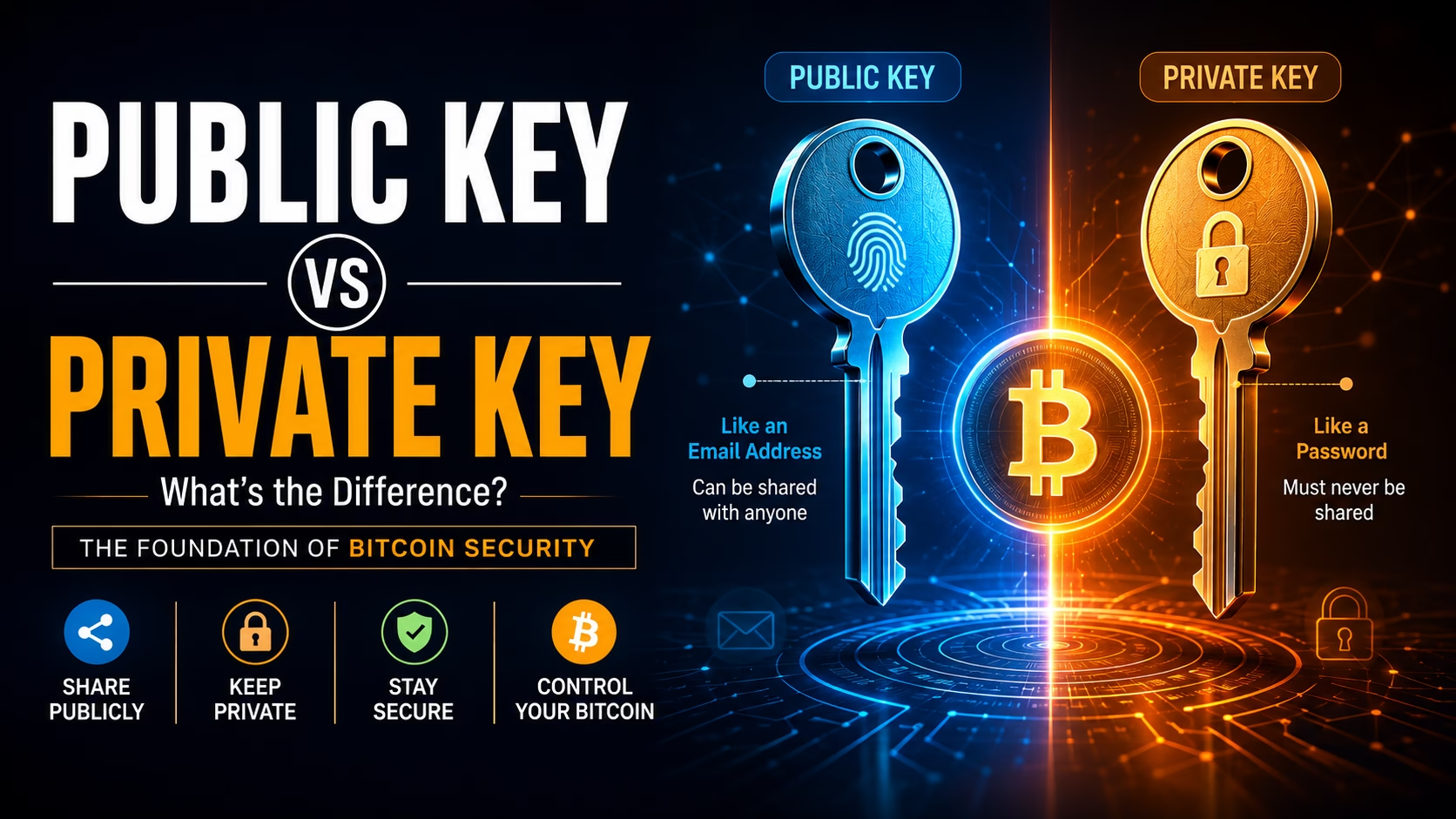
Public Key vs Private Key: Introduction
If you’ve ever used a Bitcoin wallet, you’ve probably heard terms like public key, private key, wallet address, and seed phrase.
For beginners, these terms often sound confusing because they all seem related to sending and receiving Bitcoin.
However, each one serves a different purpose.
Understanding the difference between a public key and a private key is one of the most important steps in learning how Bitcoin works.
These cryptographic keys make it possible to send, receive, and secure Bitcoin without relying on a bank or any central authority.
In this guide, you’ll learn:
- What a public key is
- What a private key is
- How they work together
- Why you should never share your private key
- How Bitcoin uses cryptography to secure transactions
- Common mistakes beginners should avoid
By the end of this article, you’ll understand why these keys are considered the foundation of Bitcoin security.
Quick Summary
If you’re new to Bitcoin, remember these key points:
- A public key can be shared with others.
- A private key must always remain secret.
- Public keys help generate wallet addresses.
- Private keys authorize Bitcoin transactions.
- Anyone with your private key can control your Bitcoin.
- Losing your private key may permanently prevent access to your Bitcoin if no recovery method is available.
💡 Key Takeaway
Think of your public key as something that helps others identify where to send Bitcoin, while your private key proves that you have the authority to spend Bitcoin associated with your wallet.
Why Does Bitcoin Use Keys?
Traditional banking relies on usernames, passwords, and banks to verify transactions.
Bitcoin works differently.
There is no bank that checks whether you’re the rightful owner of your funds.
Instead, Bitcoin relies on public-key cryptography, a mathematical system that allows users to prove ownership of Bitcoin without revealing secret information.
This makes it possible for anyone in the world to verify transactions while only the wallet owner can authorize spending.
What Is a Public Key?
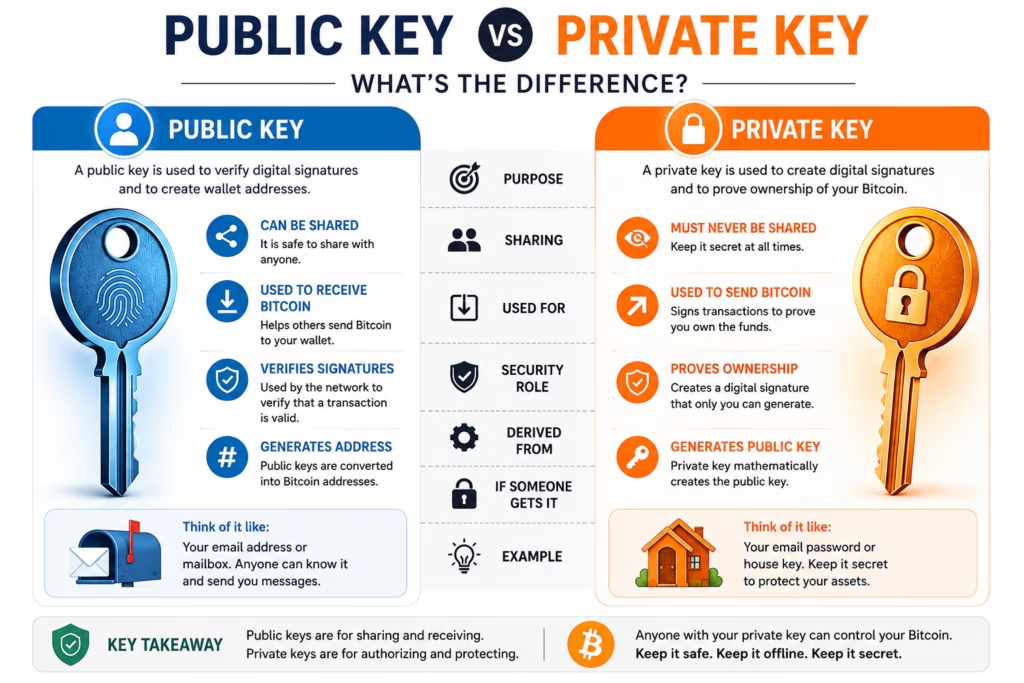
A public key is a cryptographic key that is mathematically derived from a private key.
Its primary purpose is to help verify digital signatures and support the creation of Bitcoin addresses.
Unlike a private key, a public key is designed to be shared when needed.
However, in everyday Bitcoin use, people usually share a Bitcoin address rather than the raw public key.
A public key does not allow someone to spend your Bitcoin.
Its purpose is to participate in secure verification within the Bitcoin system.
Real-Life Analogy
Imagine your home has a mailbox.
Anyone can know the location of your mailbox and send letters to it.
Knowing where the mailbox is does not allow them to enter your home.
A public key plays a similar role.
It helps others send Bitcoin to you, but it does not give them control over your funds.
What Can a Public Key Do?
A public key helps:
- Verify digital signatures.
- Support the creation of Bitcoin addresses.
- Participate in secure transaction verification.
- Allow others to send Bitcoin using the corresponding address.
It cannot:
- Spend Bitcoin.
- Recover a private key.
- Unlock your wallet.
📌 Did You Know?
Bitcoin wallets usually display a wallet address instead of the raw public key because addresses are shorter and more practical to share.
What Is a Private Key?
A private key is a secret cryptographic key that gives you the ability to authorize Bitcoin transactions associated with your wallet.
It acts as proof that you control the Bitcoin linked to that wallet.
Every Bitcoin wallet has one or more private keys, depending on how it is designed.
Modern wallets often generate many private keys from a single recovery seed using standardized methods.
Unlike a password that can usually be reset through a company, a Bitcoin private key generally cannot be recovered if it is permanently lost and no backup exists.
Real-Life Analogy
Think of a public key as your email address.
Anyone can send you an email if they know your address.
Your private key is like the password to that email account.
The address can be shared freely.
The password should never be shared.
The same principle applies to Bitcoin.
What Can a Private Key Do?
A private key allows you to:
- Authorize Bitcoin transactions.
- Create valid digital signatures.
- Prove ownership of your Bitcoin.
- Control the assets associated with your wallet.
It should never be:
- Shared with anyone.
- Posted online.
- Stored in insecure locations.
- Sent through email or messaging apps.
⚠ Common Mistake
Many beginners believe they need to share their private key to receive Bitcoin.
This is incorrect.
To receive Bitcoin, you typically share a wallet address.
Your private key should remain confidential at all times.
Why Is the Private Key So Important?
Your Bitcoin is not physically stored inside your wallet.
Instead, ownership is represented on the blockchain.
The private key is what allows you to create a valid digital signature proving that you have the right to spend the Bitcoin associated with your wallet.
If another person gains access to your private key, they may be able to authorize transactions from your wallet.
This is why protecting your private key is one of the most important responsibilities of every Bitcoin user.
How Do Public Keys and Private Keys Work Together?
Although public keys and private keys have different purposes, they are designed to work as a pair.
They are mathematically connected through public-key cryptography, but knowing the public key does not reveal the private key.
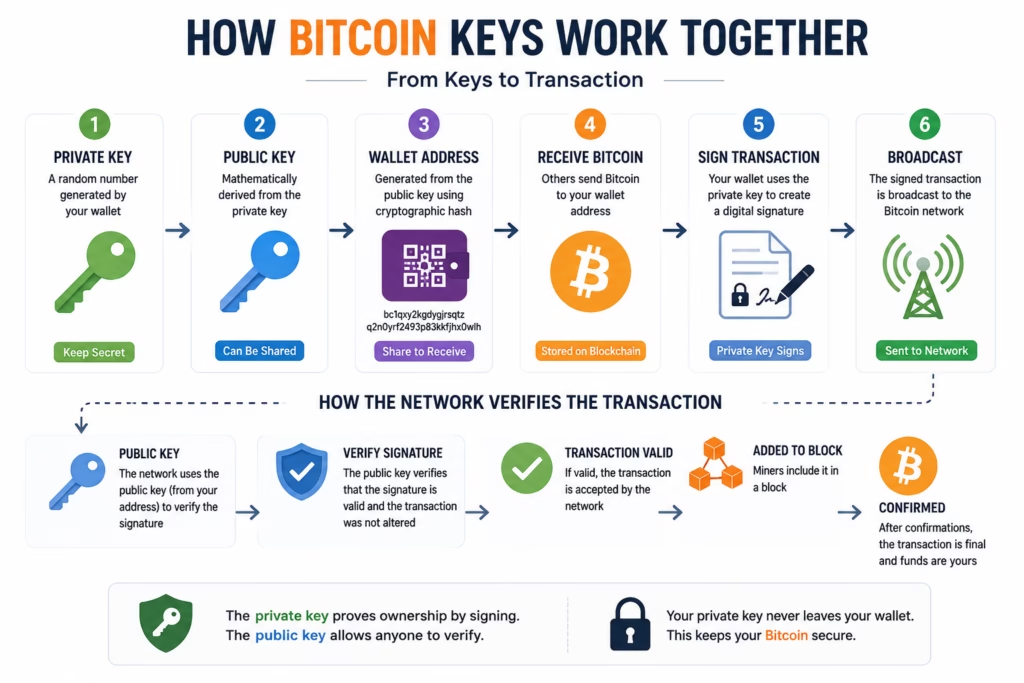
When you create a Bitcoin wallet:
- A private key is generated.
- A public key is mathematically derived from that private key.
- A Bitcoin address is generated from the public key.
When someone sends Bitcoin to your address, the blockchain records that transaction.
Later, when you want to spend those Bitcoin, your wallet uses the private key to create a digital signature proving that you are authorized to spend them.
The network verifies the signature using the corresponding public key.
At no point is your private key shared with the Bitcoin network.
Bitcoin Key Flow
Private Key
      │
      ▼
Public Key
      │
      ▼
Bitcoin Address
      │
      ▼
Receive Bitcoin
      │
      ▼
Private Key Creates Digital Signature
      │
      ▼
Network Verifies Using Public Key
      │
      ▼
Transaction Confirmed
💡 Key Takeaway
The private key signs a transaction.
The public key verifies that signature.
This allows Bitcoin to prove ownership without exposing the secret private key.
Public Key vs Private Key
| Feature | Public Key | Private Key |
|---|---|---|
| Purpose | Helps verify digital signatures and supports address generation | Authorizes Bitcoin transactions |
| Can be shared? | Yes, when needed | Never |
| Used to receive Bitcoin? | Indirectly, through the wallet address | No |
| Used to send Bitcoin? | No | Yes |
| Stored in wallet? | Yes | Yes |
| Should remain secret? | Not necessarily | Always |
| If someone gets it | They cannot spend your Bitcoin | They may be able to control your Bitcoin |
Public Key vs Wallet Address
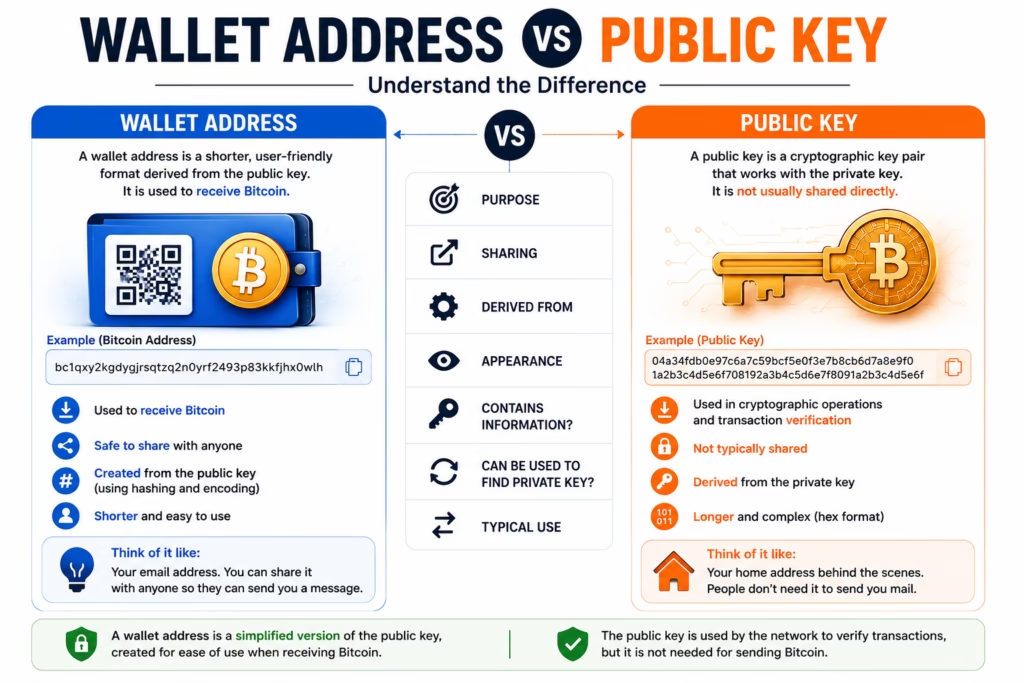
Many beginners think a public key and a wallet address are the same thing.
They are closely related, but they are not identical.
A Bitcoin wallet normally shares a wallet address, not the raw public key.
Why?
Because wallet addresses are:
- Shorter
- Easier to share
- Designed for everyday use
- Generated from the public key
Think of it like this:
Private Key

↓

Public Key

↓

Wallet Address
In normal transactions, users exchange wallet addresses instead of public keys.
Real-Life Analogy
Imagine sending a parcel.
You write the recipient’s mailing address on the package.
You do not write the blueprint of the house.
A wallet address is similar.
It is the practical destination people use when sending Bitcoin.
What Is a Digital Signature?
One of Bitcoin’s most important security features is the digital signature.
When you send Bitcoin, your wallet uses the private key to generate a unique digital signature for that transaction.
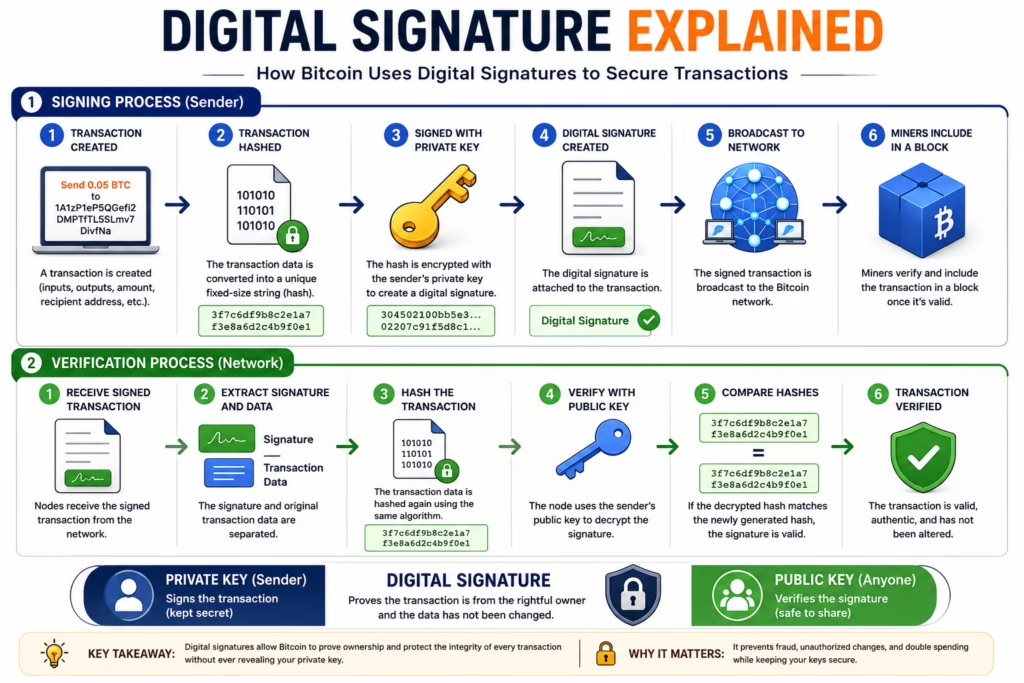
This signature proves that:
- The transaction was authorized by the wallet owner.
- The transaction has not been altered after signing.
- The private key was used without revealing it.
Other Bitcoin nodes verify the signature using the public key.
If verification succeeds, the transaction is considered valid.
Why Doesn’t Bitcoin Share the Private Key?
A common beginner question is:
“If the network needs my private key, why doesn’t it simply ask for it?”
The answer is simple:
It doesn’t need your private key.
The network only needs proof that you control it.
The digital signature provides that proof.
This is one of the reasons Bitcoin can remain both secure and decentralized.
📌 Did You Know?
Every Bitcoin transaction generates a new digital signature.
Even if you send Bitcoin to the same person multiple times, the signature is unique to each transaction.
Why Is It So Difficult to Guess a Private Key?
Private keys are extremely large random numbers.
The total number of possible private keys is so enormous that guessing someone else’s valid private key is considered computationally infeasible with current technology.
This immense key space is one of the foundations of Bitcoin’s security.
What Happens During a Bitcoin Transaction?
Let’s simplify the process.
Alice wants to send Bitcoin to Bob.
Here’s what happens:
- Bob shares his wallet address.
- Alice creates the transaction.
- Alice’s wallet signs it using her private key.
- The signed transaction is broadcast to the Bitcoin network.
- Bitcoin nodes verify the signature using Alice’s public key.
- Miners include the transaction in a block.
- After confirmation, Bob’s wallet reflects the updated balance.
Throughout this process:
- Alice’s private key remains secret.
- Only the digital signature is shared.
- Anyone can verify the transaction.
- No one learns Alice’s private key.
⚠ Common Mistake
Some users think they should back up only their public key.
This is incorrect.
Public keys can usually be regenerated from your wallet.
The information that requires careful protection is your recovery phrase and the private keys derived from it.
Why This System Is Secure
Bitcoin combines:
- Public-key cryptography
- Digital signatures
- Cryptographic hashing
- Blockchain verification
- Decentralized consensus
Together, these technologies allow strangers anywhere in the world to exchange value without relying on a central authority.
Each layer contributes to the overall security of the network.
What Happens If You Lose Your Private Key?
This is one of the most important questions every Bitcoin user should understand.
Unlike traditional banking, Bitcoin has no customer support department that can reset your account password.
If you permanently lose:
- Your private key
- Your wallet
- Your recovery (seed) phrase
then you may permanently lose access to your Bitcoin.
The Bitcoin still exists on the blockchain, but without the correct cryptographic credentials, it cannot be spent.
Can You Recover a Lost Private Key?
In most cases, no.
However, modern wallets usually generate a recovery phrase (seed phrase) when the wallet is created.
If you still have that recovery phrase, you can restore your wallet and regenerate the private keys.
This is why the recovery phrase is considered one of the most valuable pieces of information associated with a Bitcoin wallet.
💡 Key Takeaway
Protecting your recovery phrase is just as important as protecting your private key because it can regenerate your wallet and associated keys.
Can Someone Steal Bitcoin Using Only Your Public Key?
No.
A public key is designed to be shared when necessary.
Knowing your public key does not allow someone to:
- Spend your Bitcoin
- Discover your private key
- Take control of your wallet
The security of Bitcoin depends on the mathematical properties of public-key cryptography, which make deriving the private key from the public key computationally infeasible with current technology.
Can Someone Steal Bitcoin Using Your Private Key?
Yes.
Anyone who gains access to your private key (or your recovery phrase) may be able to authorize transactions from your wallet.
This is why:
- Private keys should never be shared.
- Recovery phrases should never be stored carelessly.
- Wallet backups should be protected.
Best Practices for Protecting Your Private Key
Follow these security practices whenever you use a Bitcoin wallet.
Keep It Offline
Whenever possible, store recovery information offline rather than in cloud storage or email.
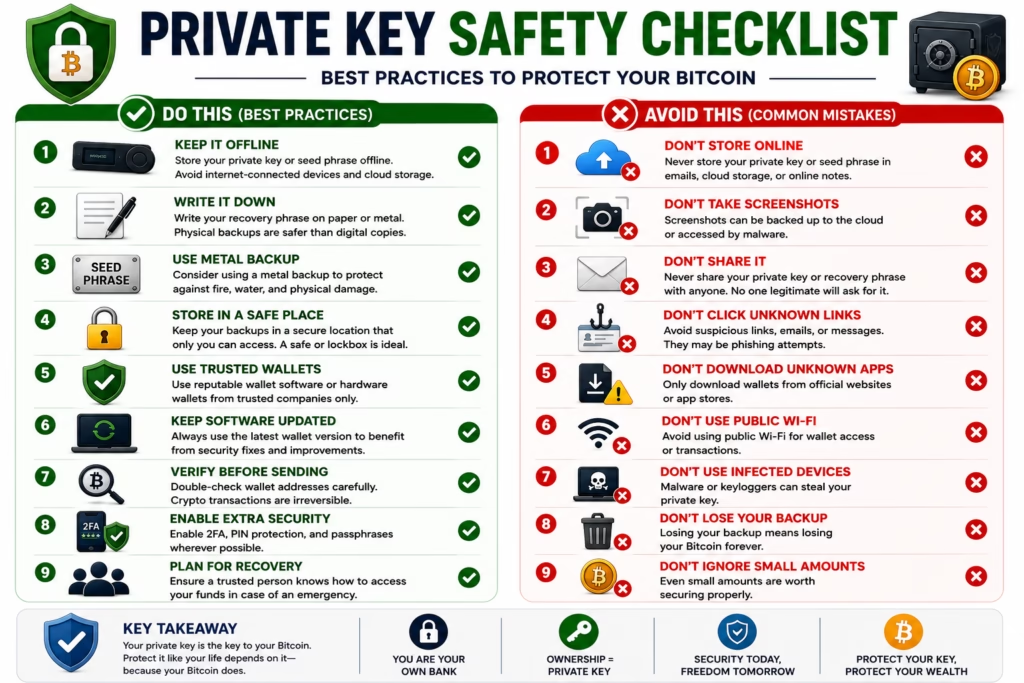
Never Share It
No legitimate exchange, wallet provider, or support representative should ask for your private key or recovery phrase.
Use Trusted Wallet Software
Download wallets only from official websites or reputable app stores.
Avoid unofficial downloads from unknown sources.
Keep Software Updated
Wallet updates often include important security improvements and bug fixes.
Verify Before Sending
Always double-check the recipient’s wallet address before confirming a Bitcoin transaction.
Blockchain transactions are generally irreversible after confirmation.
📌 Did You Know?
Many reported cryptocurrency thefts occur because attackers obtain recovery phrases through phishing websites or fraudulent support messages—not because the Bitcoin blockchain itself was compromised.
Common Beginner Mistakes
Sharing a Screenshot of the Recovery Phrase
Some users save screenshots in cloud photo backups.
This increases the risk that recovery information could be exposed if cloud accounts are compromised.
Confusing Wallet Address With Private Key
A wallet address is intended for receiving Bitcoin.
A private key is used to authorize spending.
They are not interchangeable.
Believing Bitcoin Can Be Reset
Unlike online banking, Bitcoin has no password reset function for private keys.
Responsibility for backups rests with the wallet owner.
Downloading Fake Wallet Apps
Fraudulent wallet applications sometimes imitate legitimate software.
Always verify that you are using the official application before installing it.
Ignoring Backups
Hardware failure, accidental deletion, theft, or device loss can happen unexpectedly.
Secure backups reduce the risk of permanent loss of access.
⚠ Common Mistake
Some beginners believe that if they know their wallet address, they can always recover their Bitcoin later.
This is incorrect.
A wallet address identifies where Bitcoin can be received.
Ownership is controlled through the private key (or a properly backed-up recovery phrase).
Frequently Asked Questions:
What is the difference between a public key and a private key?
A public key is used to verify digital signatures and support address generation.
A private key authorizes Bitcoin transactions and must remain confidential
Can I share my public key?
Yes.
In practice, users usually share a wallet address rather than the raw public key.
Can I share my private key?
No.
Anyone who obtains your private key may be able to control the associated Bitcoin.
Is a wallet address the same as a public key?
No.
A wallet address is generated from the public key and is the identifier normally shared when receiving Bitcoin.
What happens if I lose my private key?
If you have no recovery phrase or backup, you may permanently lose access to your Bitcoin.
Can someone guess my private key?
The number of possible private keys is so large that randomly guessing a valid private key is considered computationally infeasible using current technology.
Does every Bitcoin wallet have a public and private key?
Yes.
Bitcoin wallets rely on cryptographic key pairs to enable secure ownership and transaction authorization.
What Should You Learn Next?
Continue building your Bitcoin knowledge with:
- What Is Bitcoin?
- What Is Blockchain?
- How Bitcoin Wallets Work
- Bitcoin Mining Explained
- How Bitcoin Transactions Work
- What Is A Bitcoin Address?
- What Is a Bitcoin Address?
- Bitcoin Transactions Explained
- Seed Phrase Explained
- Bitcoin Security Best Practices
Final Thoughts
Public keys and private keys are at the heart of Bitcoin’s security model.
Although they work together, they serve very different purposes.
A public key helps others verify transactions and supports address generation, while a private key allows the wallet owner to authorize spending without revealing secret information.
Understanding this relationship makes it easier to understand Bitcoin wallets, digital signatures, and blockchain security as a whole.
Whether you plan to buy Bitcoin or simply want to understand the technology, learning how cryptographic keys work is an essential step toward understanding the broader Bitcoin ecosystem.
Disclaimer
This article is intended for educational and informational purposes only.
It should not be considered financial, investment, legal, or cybersecurity advice.
Always verify important information using official documentation and protect your recovery phrase and private keys according to established security best practices.
References
Review and verify information using primary sources such as:
- Bitcoin Whitepaper (2008)
- Bitcoin.org
- Bitcoin Core Documentation
- Bitcoin Developer Documentation
- BIP-32 (Hierarchical Deterministic Wallets)
- BIP-39 (Mnemonic Seed Phrases)
- BIP-44 (Wallet Structure Standard)