

Introduction
Imagine you’ve just bought your first Bitcoin.
You install a wallet, tap “Create New Wallet,” and suddenly the app displays 12 random words.
The wallet tells you something like:
“Write these words down. Store them safely. Never share them with anyone.”
At first glance, it feels strange.
Why would twelve simple words be more important than your password?
The answer is surprisingly simple:
Those words are the master backup for your entire wallet.
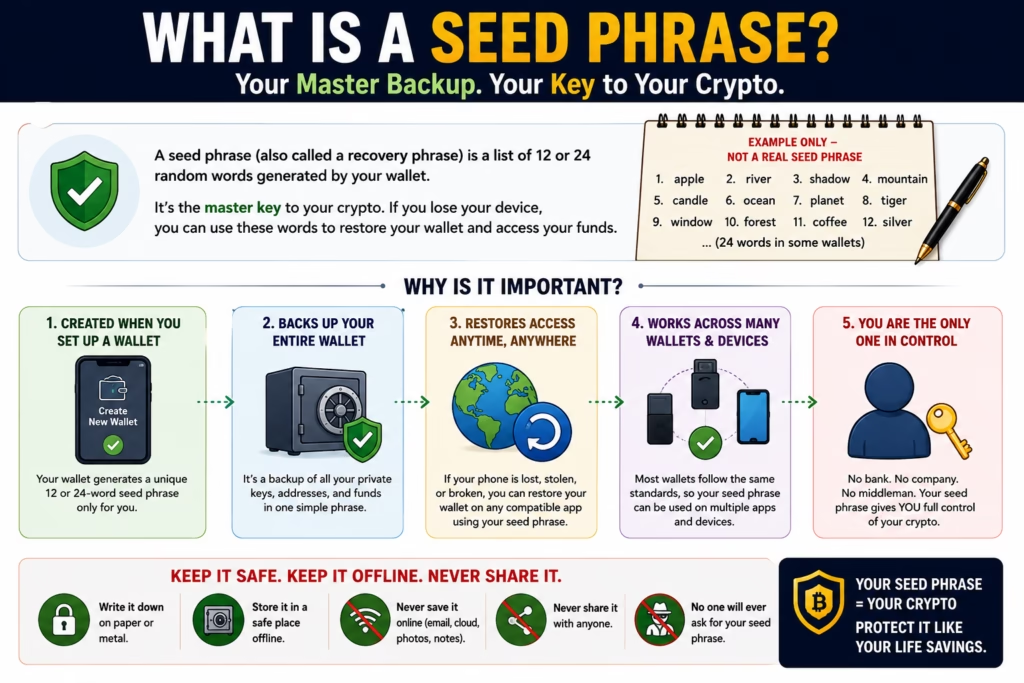
If your phone is lost, stolen, damaged, or stops working, your seed phrase can restore your wallet and give you access to your Bitcoin again.
But there’s another side to the story.
If someone else gets those same words, they may be able to restore your wallet too.
That’s why experienced Bitcoin users often say:
“Protect your seed phrase more carefully than your wallet.”
In this guide, you’ll learn exactly what a seed phrase is, how it works, why it matters, how it differs from a private key, and the best ways to keep it safe.
By the end, you’ll understand why these seemingly random words are among the most valuable pieces of information a Bitcoin owner can possess.
Quick Summary
A seed phrase is:
- The master backup for your wallet.
- Usually made up of 12 or 24 words.
- Used to restore your wallet if you lose your device.
- More important than your wallet password.
- Something you should never share with anyone.
💡 Key Takeaway
Your Bitcoin isn’t stored on your phone.
Your wallet stores the information needed to access it.
Your seed phrase is the backup that can recreate those credentials if your wallet is lost or replaced.
What Is a Seed Phrase?
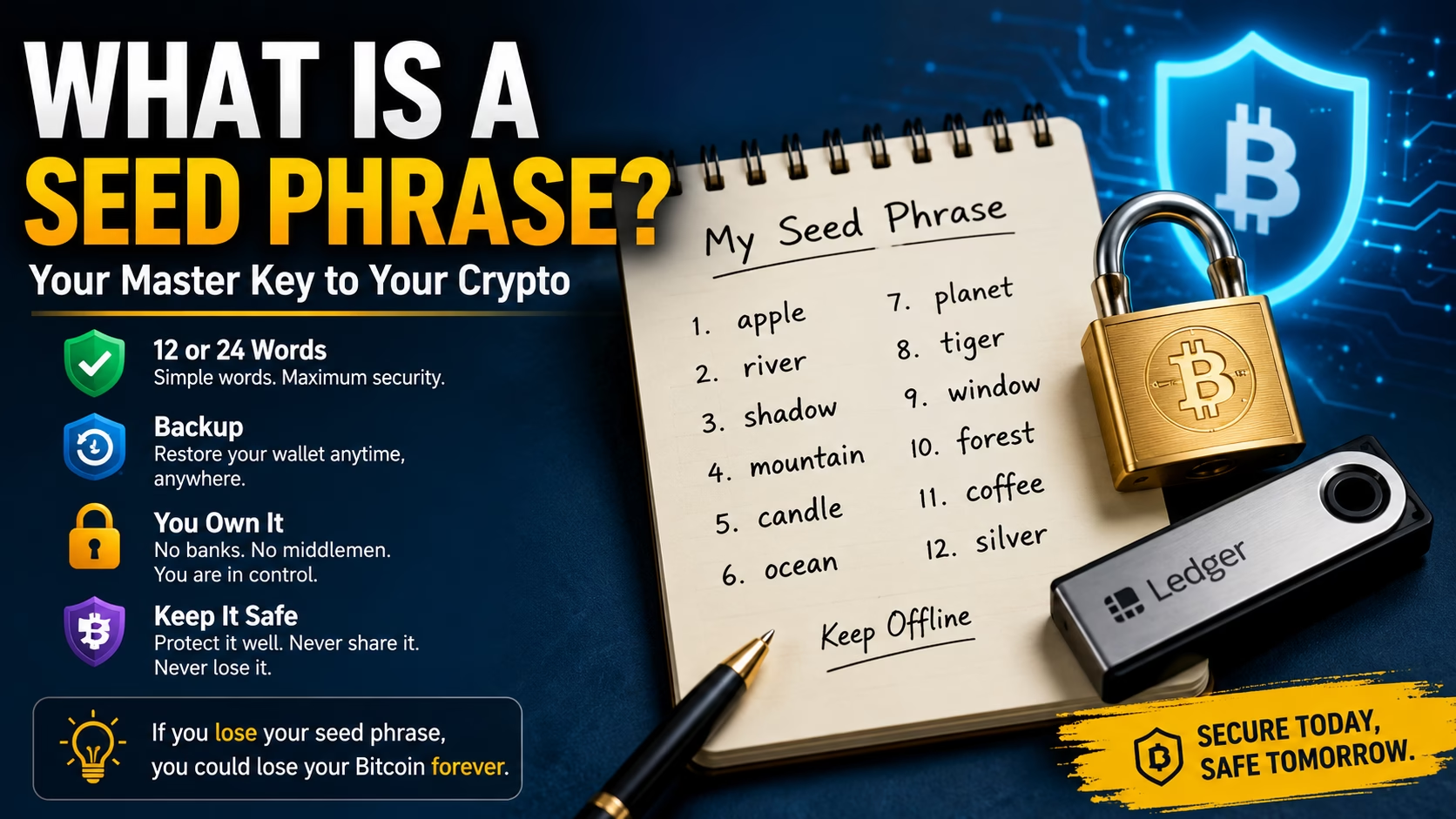
A seed phrase is a list of words generated by your cryptocurrency wallet when you create a new wallet.
These words act as the master backup for your wallet.
Instead of remembering long strings of random numbers and letters, you only need to protect a small list of easy-to-read words.
For example, a wallet might generate words like:
apple
river
shadow
mountain
candle
ocean
planet
tiger
window
forest
coffee
silver
This is only an example, not a real recovery phrase.
Your actual wallet will generate a unique sequence.
Those words contain the information needed to recreate your wallet if you ever lose access to it.
Why Does a Wallet Generate These Words?
Let’s imagine two different situations.
Scenario 1
You buy a new phone.
Your old phone still works.
You simply install your wallet again.
No problem.
Scenario 2
Your phone falls into a swimming pool.
It never turns on again.
Without a backup…
Your Bitcoin wallet is gone.
Fortunately, if you wrote down your seed phrase when you created the wallet, you can install a compatible wallet on a new device, enter your recovery words, and regain access.
Your Bitcoin never left the blockchain.
You simply restored the credentials needed to manage it.
Real-Life Analogy
Think of your wallet like a house.
Your smartphone is the front door.
Your wallet app is the lock.
Your seed phrase is the master key.
If the front door is replaced, you can still unlock the house using the master key.
But if someone else gets that master key, they can unlock the house too.
That’s why protecting your seed phrase is so important.
Why Is It Called a “Seed” Phrase?
The word seed is used because these words are the starting point from which your wallet can generate all of its private keys, public keys, and Bitcoin addresses.
You can think of it like planting a seed in a garden.
From one tiny seed, an entire tree grows.
In the same way, one seed phrase can generate an entire Bitcoin wallet with many receiving addresses.
This is why modern wallets are called Hierarchical Deterministic (HD) wallets—they can create many keys and addresses from a single backup phrase.
The good news is that you don’t need to perform any of these calculations yourself.
Your wallet handles the technical work automatically.
Are Seed Phrases Only Used for Bitcoin?
No.
Many cryptocurrency wallets use the same recovery phrase standard to manage multiple cryptocurrencies.
For example, a compatible wallet might let you manage Bitcoin, Ethereum, Litecoin, and other supported assets using one recovery phrase.
However, compatibility depends on the wallet software and the standards it supports.
Always check whether the wallet you’re restoring into supports the same recovery format before importing your phrase.
📌 Did You Know?
Many modern wallets can generate hundreds or even thousands of unique Bitcoin addresses from a single seed phrase. This improves privacy while allowing you to back up everything with just one recovery phrase.
12 Words vs 24 Words: What’s the Difference?
One of the first things you’ll notice when creating a crypto wallet is that not every wallet gives you the same number of recovery words.
Some wallets display 12 words.
Others generate 24 words.
Naturally, beginners ask:
“Which one is better?”
The answer is:
Both are secure when generated by a trusted wallet.
The biggest difference is the amount of randomness (entropy) used to create them.
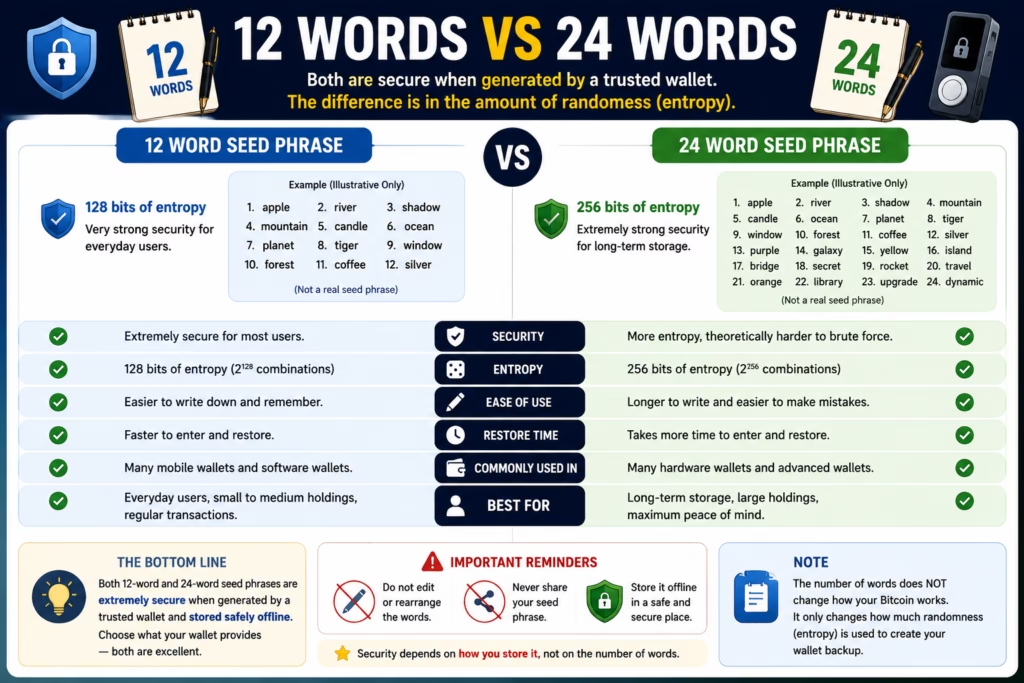
A 24-word phrase contains more entropy than a 12-word phrase, making it theoretically harder to guess. In practice, however, both are considered extremely secure when generated correctly and protected properly.
For most everyday Bitcoin users, the choice is usually determined by the wallet they’re using.
12-Word Seed Phrase
A 12-word recovery phrase is the most common option you’ll encounter.
Many beginner-friendly wallets use this format because it’s easier to write down, verify, and restore.
Advantages
- Easier to record correctly.
- Faster to restore.
- Less likely to contain writing mistakes.
- Supported by many popular wallets.
24-Word Seed Phrase
Some wallets, particularly those designed for advanced users or long-term storage, generate a 24-word recovery phrase.
The additional words increase entropy and make the backup even more resistant to brute-force attacks, although the practical security difference for most users is small.
Advantages
- More entropy.
- Preferred by some hardware wallet manufacturers.
- Excellent for long-term cold storage.
Which Should You Choose?
If your wallet generates 12 words, don’t worry.
If it generates 24 words, don’t worry either.
The important thing isn’t the number of words.
It’s how well you protect them.
A perfectly protected 12-word seed phrase is far safer than a 24-word phrase that has been photographed, emailed, or stored insecurely.
💡 Quick Tip
Your wallet chooses the recovery phrase length.
Avoid trying to shorten, reorder, or modify the words yourself.
How Does a Seed Phrase Actually Work?
This is where many people become confused.
Some assume their Bitcoin is somehow stored inside those 12 or 24 words.
That’s not how it works.
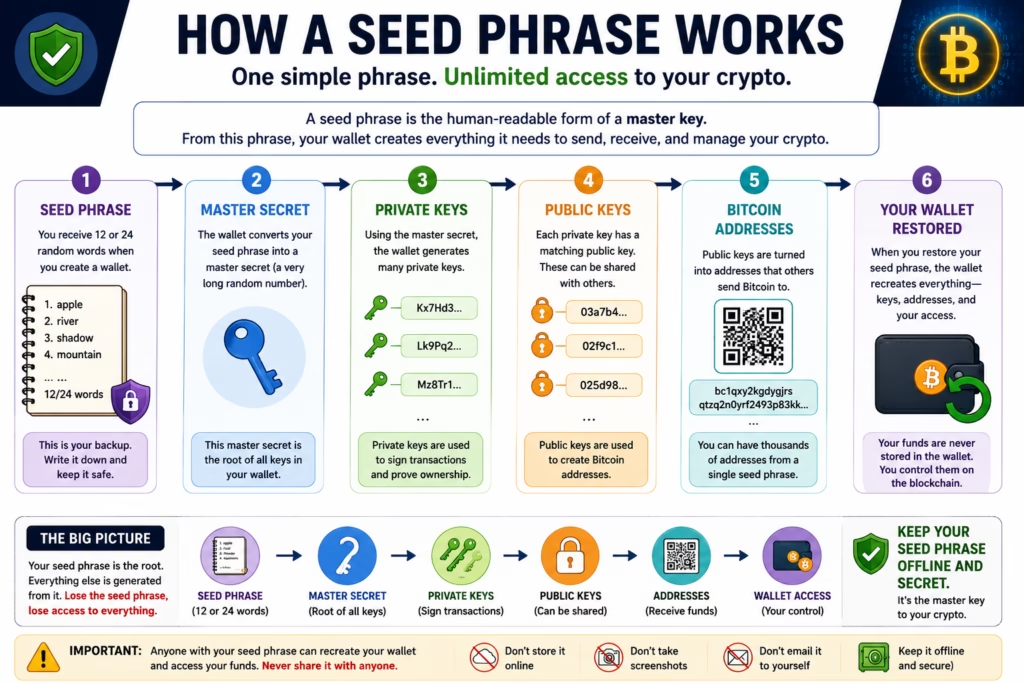
Your Bitcoin always remains on the Bitcoin blockchain.
The seed phrase doesn’t store your Bitcoin.
Instead, it stores the information your wallet needs to recreate the cryptographic keys that control access to your funds.
Think of it like this:
Seed Phrase
      │
      ▼
Master Secret
      │
      ▼
Private Keys
      │
      ▼
Public Keys
      │
      ▼
Bitcoin Addresses
Your wallet performs all of these steps automatically.
You never have to calculate anything yourself.
Real-Life Analogy
Imagine buying a huge filing cabinet with thousands of drawers.
Instead of carrying thousands of different keys, you have one master key.
That master key opens everything.
A seed phrase works in much the same way.
One backup can regenerate all the keys and addresses associated with your wallet.
Seed Phrase vs Private Key
These two terms are often mixed up.
Although they’re related, they are not the same thing.
A private key controls one cryptographic key pair (or a specific output, depending on wallet design).
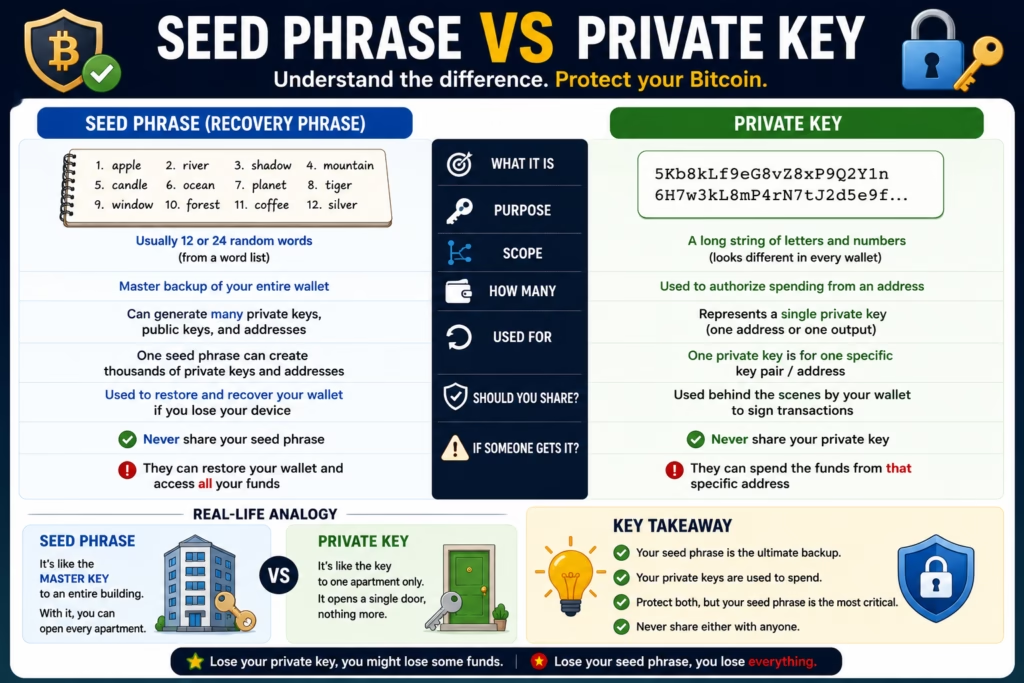
A seed phrase is the master backup from which a modern HD wallet can derive many private keys.
Here’s an easy comparison:
| Seed Phrase | Private Key |
|---|---|
| Usually 12 or 24 words | Long string of characters |
| Master backup for the wallet | Used to authorize spending |
| Can generate many private keys | Represents a single cryptographic key |
| Used to restore the wallet | Used behind the scenes by the wallet |
| Never share | Never share |
Simple Analogy
Think about your home.
The seed phrase is like owning the land deed for an entire apartment building.
The private key is like having the key to one apartment.
Owning the deed allows you to regain control of the whole property.
The apartment key opens just one unit.
Modern wallets use the seed phrase to recreate all the necessary keys.
Can Someone Steal Your Bitcoin Using Your Seed Phrase?
Unfortunately…
Yes.
Unlike your Bitcoin address, your seed phrase should never be shared.
If another person gets your recovery phrase, they may be able to restore your wallet on their own device.
That means they could gain access to your funds.
This is why scammers often try to trick people into revealing their recovery phrases.
Common Scam Example
You receive a message saying:
“Your wallet has a security problem. Please verify your 12 recovery words.”
It might even look like it’s from a wallet company.
This is almost certainly a scam.
Legitimate wallet providers should never ask for your seed phrase to fix a problem or verify your account.
Why Does Every Wallet Generate Different Words?
If you and your friend both install the same wallet today, you’ll receive different recovery phrases.
That’s exactly what should happen.
Wallets use secure random number generation to create unique recovery phrases.
The odds of two people receiving the same valid seed phrase are so incredibly small that, for practical purposes, they can be considered impossible.
This uniqueness is one of the foundations of Bitcoin security.
Can I Change My Seed Phrase?
Not normally.
A seed phrase is created when the wallet is generated.
If you want a different recovery phrase, you usually create a brand-new wallet.
This will generate an entirely new set of recovery words, new private keys, and new Bitcoin addresses.
If you move to a new wallet, you’ll need to transfer your funds rather than simply renaming or editing the recovery phrase.
📌 Did You Know?
Most modern wallets follow standards such as BIP-39 for recovery phrases and BIP-32/BIP-44 for deriving keys and addresses. These standards help compatible wallets restore the same funds using the same seed phrase, although support can vary between wallet applications.
What’s the Best Way to Store a Seed Phrase?
Creating a wallet is easy.
Protecting it properly is where most people make mistakes.
When your wallet shows you the recovery phrase, that’s your only opportunity to create a reliable backup.
Take your time.
Don’t rush through this step.
A few careful minutes today could save years of investment later.
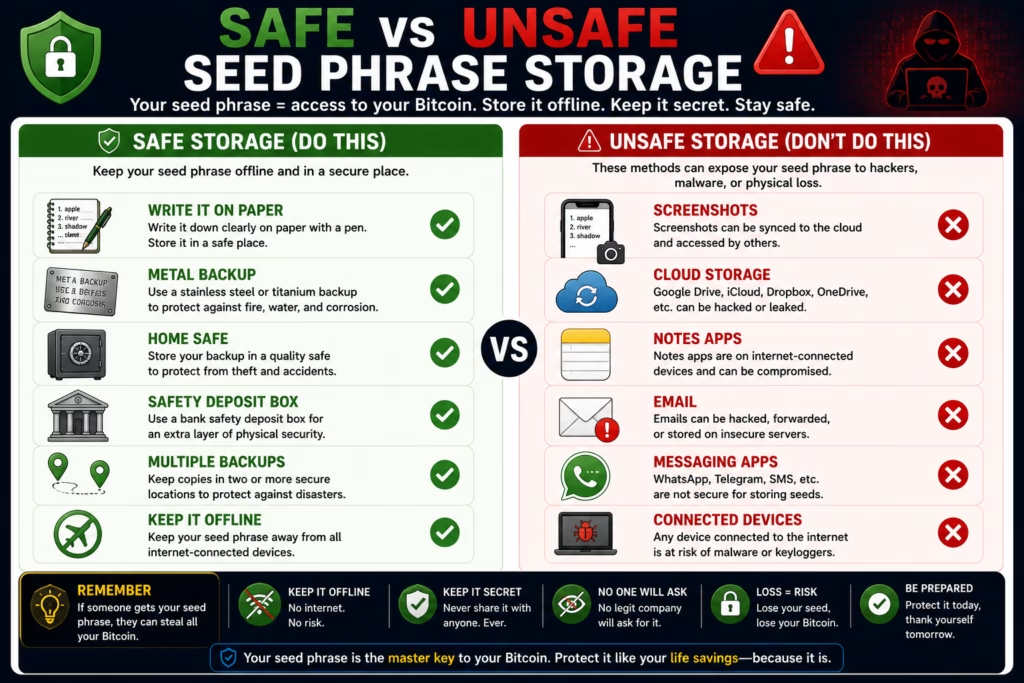
Option 1: Write It on Paper
For many beginners, writing the recovery phrase neatly on paper is the simplest option.
Use permanent ink and make sure every word is spelled correctly and kept in the correct order.
Store the paper somewhere only you (or trusted heirs, if part of your estate planning) can access.
Advantages
- Easy to create.
- Doesn’t require special equipment.
- Completely offline.
- Free.
Disadvantages
- Can burn in a fire.
- Can be damaged by water.
- Can fade over time.
- Can be lost if stored carelessly.
Option 2: Metal Backup Plates
Many long-term Bitcoin holders use metal backup plates.
Instead of writing on paper, the recovery words are stamped or engraved into stainless steel or titanium.
Because metal can survive conditions that destroy paper, these backups are often chosen for long-term storage.
Advantages
- Fire resistant.
- Water resistant.
- Durable for many years.
- Suitable for long-term storage.
Disadvantages
- More expensive than paper.
- Takes longer to prepare.
- Requires purchasing a quality product.
Which Is Better?
There isn’t one answer for everyone.
If you’re just getting started and own a small amount of Bitcoin, a carefully protected paper backup may be sufficient.
If you’re storing a significant amount for many years, many people choose a durable metal backup for added resilience.
The important part isn’t buying expensive accessories.
It’s making sure your recovery phrase is accurate, protected, and accessible when you genuinely need it.
Where Should You Store Your Seed Phrase?
A common question is:
“Can I just save it on my phone?”
That’s usually not recommended.
Internet-connected devices can be lost, infected with malware, or accessed by unauthorized people.
Instead, choose a secure offline location.
Examples include:
- A secure home safe.
- A locked safety deposit box (where appropriate and legally available).
- Another secure location that protects against theft, fire, and water damage.
Some people keep multiple backups in separate secure locations to reduce the risk of losing everything in a single incident.
Whatever method you choose, make sure you can still access it years from now.
Things You Should Never Do
Some mistakes happen so often that they’re worth highlighting individually.
Avoid these whenever possible.
❌ Don’t Take a Screenshot
Screenshots may automatically sync to cloud storage.
If your cloud account is compromised, your recovery phrase could be exposed.
❌ Don’t Save It in Notes
A notes app might seem convenient.
But phones are connected to the internet, and note-taking apps may synchronize across devices.
Convenience should never come at the cost of security.
❌ Don’t Email It to Yourself
Email accounts can be compromised.
Once your recovery phrase is sitting in your inbox, you’ve introduced another potential point of failure.
❌ Don’t Share It With Anyone
No legitimate wallet company, exchange, customer support agent, or blockchain service should ask for your seed phrase.
If someone asks for it, treat it as a major warning sign.
❌ Don’t Change the Order of the Words
Every word matters.
The order matters too.
Even if all the words are correct, changing their sequence can prevent your wallet from being restored.
What Happens If You Lose Your Seed Phrase?
This depends on your situation.
Scenario 1
You still have your wallet open and working.
Good news.
Many wallets allow you to view or verify your recovery phrase from within the app, although the exact process depends on the wallet and its security settings.
If your wallet supports this feature, verify it in a private place and create a secure backup immediately.
Scenario 2
Your phone is lost, broken, or reset.
You never backed up the recovery phrase.
This is where things become serious.
If you have no recovery phrase and no other way to access your wallet, you may permanently lose access to your Bitcoin.
That’s why creating a secure backup is one of the first and most important steps after setting up a wallet.
Can You Recover a Lost Seed Phrase?
Usually…
No.
Unlike resetting an email password or requesting a new banking PIN, there is generally no central authority that can recreate your recovery phrase.
Wallet providers don’t keep a copy of it.
Bitcoin was designed so that you control your wallet—not a company.
That also means you’re responsible for protecting the backup.
Real-Life Analogy
Imagine putting your valuables into a safe.
You receive one master key.
The manufacturer doesn’t keep a spare.
If you lose the only key without creating a backup, opening the safe again may be impossible.
A seed phrase works in much the same way.
Frequently Asked Questions
Is a seed phrase the same as a password?
No.
A password protects access to your wallet application.
A seed phrase restores the wallet itself.
Can I change my seed phrase?
Not directly.
To get a different recovery phrase, you usually create a brand-new wallet and move your funds t
Can someone steal my Bitcoin with my seed phrase?
Yes.
Anyone with your recovery phrase may be able to restore your wallet.
Never share it.
Can I memorize my recovery phrase?
Some people do, but relying only on memory is risky.
A secure physical backup is generally recommended.
Can I make two paper backups?
Yes.
Many people keep multiple backups in separate secure locations to reduce the chance of losing access due to fire, theft, or accidental damage.
Does every wallet use the same recovery phrase format?
Many modern wallets use common standards, but not all wallets implement them in exactly the same way.
Before restoring, confirm that the wallet supports the same recovery phrase standard.
Security Checklist
Before you finish reading, make sure you can answer “Yes” to these questions:
✅ I wrote my recovery phrase down carefully.
✅ I checked the spelling and order of every word.
✅ I stored it offline.
✅ I never took a screenshot.
✅ I never emailed it to myself.
✅ I never stored it in cloud storage.
✅ I know that no legitimate company will ask for it.
✅ I understand that losing it could mean losing access to my wallet.
If you answered “Yes” to all of these, you’re already following many of the best practices recommended for protecting a Bitcoin wallet.
What Should You Learn Next?
Now that you understand recovery phrases, the next logical topic is:
Hot Wallet vs Cold Wallet: What’s the Difference?
You’ll learn:
- Which wallets are connected to the internet.
- Which wallets are better for long-term storage.
- Which option is best for beginners.
- Common myths about hardware wallets.
- Practical guidance on choosing the right wallet for different needs.
Read More:
Final Thoughts
Your seed phrase is the single most important backup for your Bitcoin wallet.
It isn’t just a list of random words—it’s the foundation that allows you to recover your wallet if your device is lost, damaged, or replaced.
Protect it carefully, store it offline, and never share it with anyone.
If you understand this one concept, you’ve already taken one of the biggest steps toward using Bitcoin safely and responsibly.
📚 References
- Bitcoin Improvement Proposal 39 (BIP-39)
- Bitcoin Improvement Proposal 32 (BIP-32)
- Bitcoin Improvement Proposal 44 (BIP-44)
- Bitcoin Developer Documentation
- Bitcoin.org Wallet Security Resources