

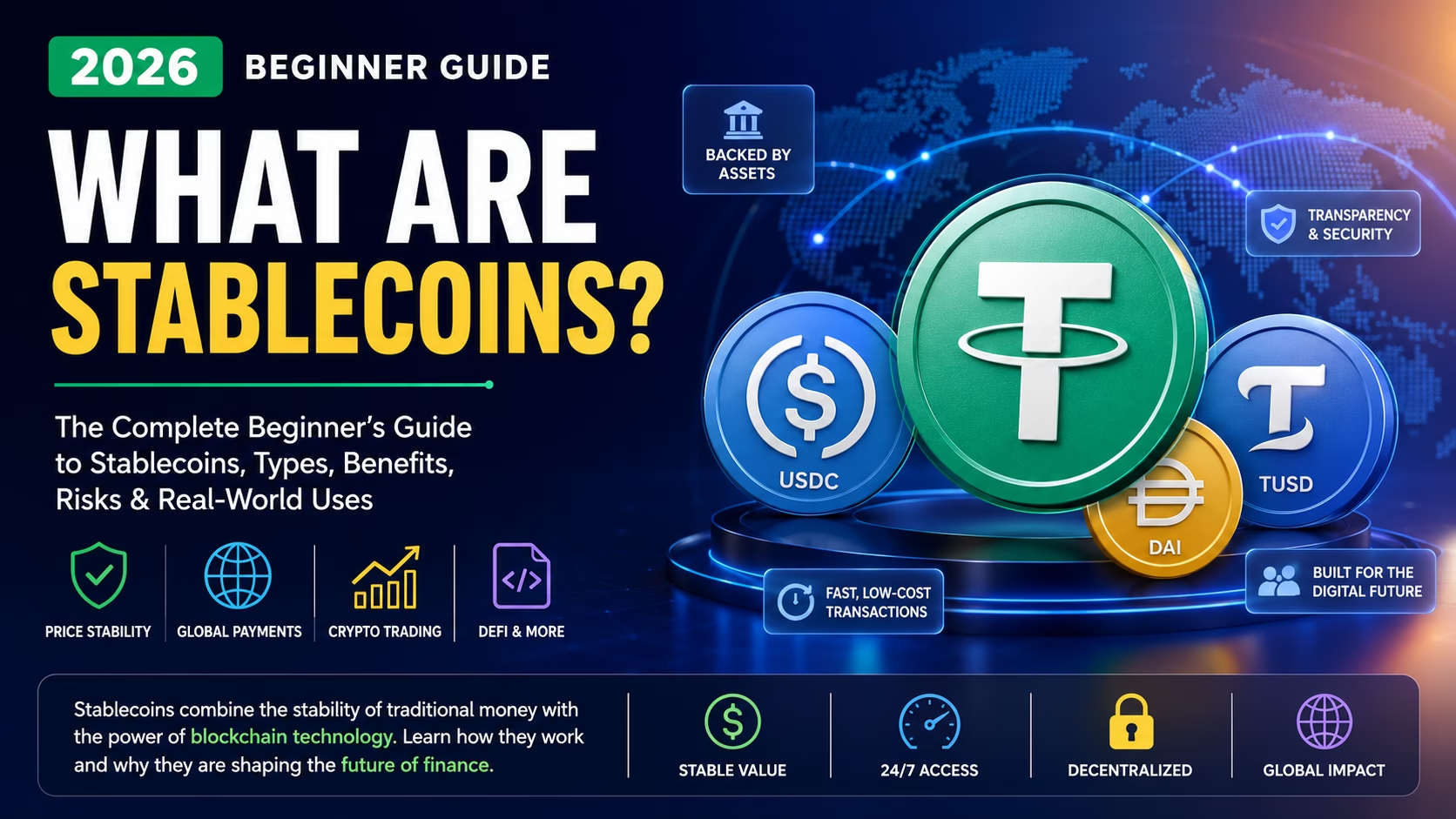
Introduction of What Are Stablecoins?
If you’ve spent even a few minutes exploring the world of cryptocurrency, you’ve probably noticed something confusing.
One day, Bitcoin might rise by 8%.
The next day, it could fall by 12%.
Ethereum and many other cryptocurrencies can also experience significant price movements over short periods.
This price volatility is one of the defining characteristics of the cryptocurrency market. While some investors see volatility as an opportunity, it can also make cryptocurrencies difficult to use for everyday transactions.
Imagine paying for a laptop worth $1,000 with a cryptocurrency that loses 15% of its value before the seller receives the payment. Or imagine sending money to a family member overseas only to discover that the value changed substantially during the transfer.
For many real-world financial activities, people want predictability.
This is exactly the problem that stablecoins were created to address.
Unlike Bitcoin, Ethereum, or many other cryptocurrencies whose prices fluctuate according to market demand, stablecoins are designed to maintain a relatively stable value by referencing another asset, such as a national currency or, in some cases, commodities or other digital assets.
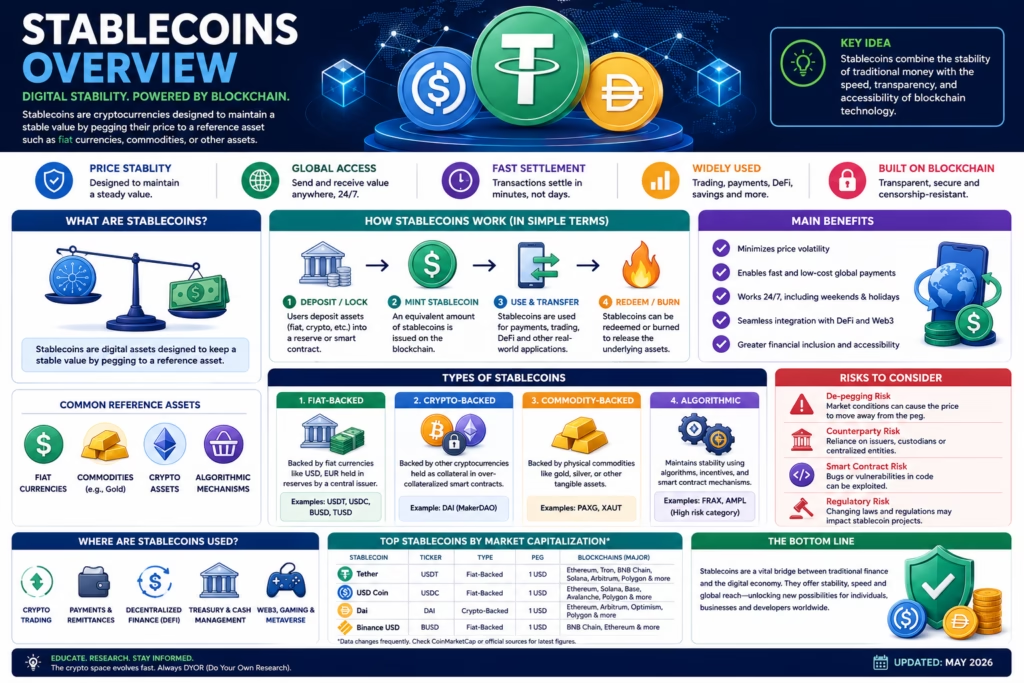
Because of this stability, stablecoins have become an important part of the cryptocurrency ecosystem. They are widely used for trading, cross-border transfers, decentralized finance (DeFi), digital payments, and many other blockchain-based applications.
However, not all stablecoins work the same way.
Some are backed by cash and short-term government securities.
Some are backed by cryptocurrency.
Others attempt to maintain their value using algorithms and economic incentives.
Understanding these differences is essential because each approach has its own benefits, risks, and trade-offs.
In this guide, you’ll learn:
- What stablecoins are
- Why they were created
- How they maintain their value
- Different types of stablecoins
- Their advantages and limitations
- Real-world use cases
- How stablecoins differ from Bitcoin and Ethereum
By the end of this guide, you’ll have a solid understanding of one of the most important innovations in modern blockchain technology.
Quick Summary
A stablecoin is a type of cryptocurrency designed to maintain a relatively stable value by referencing another asset, often a fiat currency such as the U.S. dollar.
Unlike highly volatile cryptocurrencies, stablecoins aim to reduce large price fluctuations while retaining many of the advantages of blockchain technology, such as digital transfers and compatibility with decentralized applications.
Different stablecoins use different mechanisms to support their target value, including reserves of traditional assets, overcollateralized crypto assets, or algorithmic designs.
What Are Stablecoins?
A stablecoin is a cryptocurrency designed to keep its value relatively stable over time.
Most well-known stablecoins aim to remain close to the value of one U.S. dollar, although some reference other currencies, commodities, or baskets of assets.
For example:
- If one unit of a dollar-pegged stablecoin is designed to equal $1.00, the issuer or protocol attempts to maintain that target through its chosen stabilization mechanism.
The important word here is designed.
A stablecoin is not guaranteed to remain at its target value under all circumstances. Different stablecoins have different levels of resilience, and history has shown that some have temporarily deviated from—or even permanently lost—their intended peg.
This is why understanding how a stablecoin operates is just as important as knowing what it is.
A Simple Real-Life Example
Imagine you receive your monthly salary.
Instead of converting it into Bitcoin, you convert it into a dollar-pegged stablecoin.
If Bitcoin’s price rises sharply, you might miss potential gains.
If Bitcoin’s price falls sharply, however, your savings held in the stablecoin are designed to remain much closer to their reference value.
Many people use stablecoins as a way to move value within the crypto ecosystem without being exposed to the same level of day-to-day price volatility as many other cryptocurrencies.
Why Were Stablecoins Created?
To understand stablecoins, we first need to understand one of cryptocurrency’s biggest challenges: price volatility.
Bitcoin, Ethereum, and many other digital assets are traded in open markets where prices change continuously based on supply and demand.
These price movements can be influenced by many factors, including:
- Market sentiment
- Economic news
- Regulatory developments
- Technological upgrades
- Global events
- Liquidity
- Investor expectations
This volatility makes cryptocurrencies attractive to some investors but less practical for situations where a relatively stable purchasing power is desirable.
Imagine a business accepting payment for goods using a cryptocurrency whose value changes significantly within hours. Pricing products, managing accounting records, and planning cash flow would become much more difficult.
Stablecoins were introduced to help bridge this gap by combining blockchain-based digital transfers with mechanisms intended to reduce price fluctuations.
Why Are Traditional Cryptocurrencies Volatile?
The price of Bitcoin or Ethereum is not fixed by any government or central bank.
Instead, prices are determined by market participants buying and selling on exchanges around the world.
When demand exceeds supply, prices generally rise.
When selling pressure increases, prices generally fall.
Because cryptocurrency markets operate continuously, prices can change at any time of the day or night.
While volatility can create opportunities, it also creates uncertainty for users who simply want to transfer money, save value for short periods, or conduct routine transactions.
How Stablecoins Address This Challenge
Stablecoins aim to reduce price volatility by linking their value to a reference asset.
Depending on the design, that reference may be:
- A fiat currency such as the U.S. dollar or euro
- A commodity such as gold
- A pool of cryptocurrency assets
- An algorithmic stabilization system
Each design attempts to encourage the stablecoin’s market price to remain close to its intended reference value, although no mechanism is entirely risk-free.
This distinction is important because the level of stability depends on how the stablecoin is structured, governed, and supported.
What Does “Pegged” Mean?
One of the most common terms you’ll encounter when learning about stablecoins is “pegged.”
A peg is a target reference value that a stablecoin seeks to maintain.
For example:
- A dollar-pegged stablecoin is designed to trade near $1.00.
- A euro-pegged stablecoin is designed to track the value of one euro.
- A gold-backed stablecoin may be designed to reflect the value of a specified quantity of gold.
Maintaining that peg requires different mechanisms depending on the type of stablecoin, which we’ll explore in the next part of this guide.
Quick Facts
- Stablecoins are cryptocurrencies designed to reduce price volatility.
- Many stablecoins reference the value of the U.S. dollar.
- Different stablecoins use different methods to maintain their target value.
- Stablecoins play an important role in trading, payments, and decentralized finance (DeFi).
- Not all stablecoins carry the same level of risk.
Did You Know?
The combined market value of stablecoins has grown into the hundreds of billions of dollars, making them one of the most widely used categories of digital assets within the cryptocurrency ecosystem. Their exact market size changes over time as new tokens are issued, redeemed, and traded.
Common Myth
Myth: Stablecoins can never lose their value.
Reality: Stablecoins are designed to maintain a stable value, but their effectiveness depends on how they are structured, the quality of their reserves (if applicable), market conditions, governance, and user confidence. History has shown that some stablecoins have temporarily or permanently lost their peg, making it essential to understand the specific model before using one.
Different Types of Stablecoins
Although stablecoins share the same objective—maintaining a relatively stable value—not all of them achieve this in the same way.
This is one of the most important concepts for beginners to understand.
When people hear the word stablecoin, they often assume every stablecoin works identically.
In reality, different projects use different methods to support their target value. Some rely on reserves held by an issuer, while others use cryptocurrency as collateral or algorithmic mechanisms.
Understanding these differences helps you evaluate how a particular stablecoin is designed and what risks may be associated with it.
Broadly speaking, stablecoins can be divided into four main categories:
- Fiat-backed stablecoins
- Crypto-backed stablecoins
- Commodity-backed stablecoins
- Algorithmic stablecoins
Let’s explore each one.
Fiat-Backed Stablecoins
The most widely used stablecoins today are fiat-backed stablecoins.
These stablecoins are designed to maintain their value by referencing reserves that may include cash, cash equivalents, or other financial assets, depending on the issuer’s reserve policy.
For example, if a stablecoin is designed to track the U.S. dollar, its issuer aims to maintain sufficient reserves and redemption mechanisms so that one token is intended to correspond closely to one U.S. dollar.
Well-known examples include:
- Tether (USDT)
- USD Coin (USDC)
Although both are designed to track the U.S. dollar, they are issued by different organizations and have different governance, reserve reporting practices, and operational models.
A Simple Analogy
Imagine a gift card issued by a large retail store.
The card itself is not physical cash, but it represents a claim to value within that system.
Similarly, a fiat-backed stablecoin represents digital value intended to correspond to its reference asset through the issuer’s reserve and redemption framework.
This analogy is simplified—stablecoins are blockchain-based digital tokens with different legal and operational characteristics—but it helps illustrate the basic idea.
Advantages of Fiat-Backed Stablecoins
Because of their design, fiat-backed stablecoins often provide several practical benefits.
Relatively Stable Value
Their primary objective is to reduce the large price swings commonly associated with many cryptocurrencies.
Easy to Understand
For beginners, the concept is relatively straightforward because the token is designed to reference a familiar currency such as the U.S. dollar.
Broad Ecosystem Support
Many exchanges, wallets, payment platforms, and decentralized applications support major fiat-backed stablecoins.
Efficient Digital Transfers
Depending on the blockchain network being used, stablecoins can facilitate digital transfers that may settle more quickly than some traditional international payment methods.
Actual speed and cost depend on the specific blockchain, wallet, exchange, and applicable regulations.
Risks of Fiat-Backed Stablecoins
No financial product is completely risk-free.
Users should understand several considerations.
Reserve Transparency
Confidence partly depends on the issuer’s ability to maintain appropriate reserves and provide credible disclosures regarding those reserves.
Regulatory Developments
Stablecoin regulations continue to evolve in many jurisdictions.
Future legal requirements may affect issuance, redemption, reporting, or usage.
Counterparty Risk
Because many fiat-backed stablecoins involve an issuing organization, users should understand that they may rely on that organization’s operational processes and reserve management.
Did You Know?
Some stablecoin issuers publish reserve reports or independent attestations to provide additional transparency regarding the assets supporting their tokens. However, the frequency, scope, and assurance level of these reports can differ between issuers.
Crypto-Backed Stablecoins
Instead of using traditional currencies as reserves, some stablecoins are backed by other cryptocurrencies.
At first, this idea may seem confusing.
If cryptocurrencies are volatile, how can they support a stable asset?
The answer lies in overcollateralization.
What Is Overcollateralization?
Suppose someone wants to create $100 worth of a crypto-backed stablecoin.
Instead of depositing exactly $100 in cryptocurrency, the protocol may require significantly more cryptocurrency as collateral.
For example:
- Collateral deposited: $170
- Stablecoins created: $100
If the collateral decreases in value, there is still an additional buffer designed to help maintain the system.
The exact collateral requirements depend on the protocol.
Why Use Extra Collateral?
Cryptocurrency prices can move rapidly.
Maintaining collateral above the value of issued stablecoins helps reduce the risk that normal market fluctuations immediately undermine the system.
If collateral falls below required thresholds, many protocols have predefined liquidation mechanisms intended to protect the overall system.
Example
One widely known example of a crypto-backed stablecoin is DAI, which operates through decentralized smart contracts and uses crypto assets as collateral according to protocol rules.
Its governance model differs substantially from fiat-backed stablecoins because it does not rely on a single centralized issuer in the same way.
Advantages
- Greater decentralization in some designs
- Transparent on-chain collateral
- Smart contract automation
- Reduced dependence on traditional banking infrastructure
Limitations
- More complex than fiat-backed models
- Requires overcollateralization
- Smart contract risks
- Liquidation risk during significant market declines
Commodity-Backed Stablecoins
Not every stablecoin references a national currency.
Some are designed to track commodities such as gold.
In these systems, each token is intended to represent a specified quantity of the underlying commodity, according to the issuer’s structure.
Commodity-backed stablecoins appeal to users who want blockchain-based exposure to certain physical assets without directly storing or transporting them.
However, ownership rights, redemption policies, storage arrangements, and legal terms vary by issuer and should be reviewed carefully.
Algorithmic Stablecoins
Algorithmic stablecoins attempt to maintain their target value without relying primarily on traditional reserve assets.
Instead, they use programmed rules, incentives, and token supply adjustments to encourage the market price to remain close to its intended peg.
This is one of the most technically complex categories of stablecoins.
A Simple Example
Imagine a concert venue.
If too many tickets are available, organizers may reduce availability or introduce incentives to influence demand.
If demand becomes extremely high, additional tickets might be released where appropriate.
Algorithmic stablecoin systems attempt to use economic incentives in somewhat similar ways, although the actual mechanisms are far more complex and differ between protocols.
Important Historical Lesson
Several algorithmic stablecoin projects have experienced significant failures, demonstrating that maintaining a stable peg through algorithms alone can be challenging under stressed market conditions.
For beginners, it’s important to understand that “algorithmic” does not automatically mean safer or more reliable.
Every stablecoin design involves trade-offs.
Stablecoins vs Bitcoin
Many beginners wonder:
“If Bitcoin already exists, why do we need stablecoins?”
The answer lies in their intended purpose.
| Feature | Stablecoins | Bitcoin |
|---|---|---|
| Primary Goal | Price stability | Decentralized digital money and store of value |
| Typical Price Movement | Designed to remain relatively stable | Can fluctuate significantly |
| Everyday Payments | Often used for this purpose | Possible, but price volatility may affect usability |
| Trading Pair | Commonly used | Commonly traded asset |
| DeFi | Widely used | Supported in some applications |
Neither replaces the other.
They serve different functions within the digital asset ecosystem.
Stablecoins vs Ethereum
Ethereum is a blockchain platform.
ETH is its native cryptocurrency.
Stablecoins, by contrast, are digital tokens that can exist on Ethereum and many other blockchain networks.
This means:
- Ethereum provides infrastructure.
- Stablecoins are applications or tokens that operate on compatible blockchain networks.
Many of the world’s largest stablecoins are available on Ethereum, although they are also issued on several other blockchains.
Security Tips
If you choose to use stablecoins, consider these general best practices:
- Use wallets from trusted sources.
- Enable two-factor authentication where available.
- Verify wallet addresses carefully before sending funds.
- Be cautious of phishing websites and fake wallet applications.
- Understand how the specific stablecoin you’re using is designed.
- Never assume every stablecoin has the same risk profile.
Common Beginner Mistakes
Assuming Every Stablecoin Is Identical
Each stablecoin has its own governance, reserve model, and risk profile.
Ignoring Reserve Information
For issuer-backed stablecoins, understanding reserve disclosures can help users evaluate how the token is designed.
Believing Stable Means Risk-Free
Price stability does not eliminate operational, technological, regulatory, or market risks.
Forgetting Network Fees
Although the stablecoin’s value may remain relatively stable, transferring it on certain blockchain networks can still involve transaction fees.
Key Takeaways
Understanding a stablecoin’s design is more important than simply knowing its name.
Stablecoins can be backed by fiat currencies, cryptocurrencies, commodities, or algorithmic systems.
Different stabilization mechanisms involve different benefits and trade-offs.
Stablecoins and Bitcoin serve different purposes.
Stablecoins can operate on Ethereum and many other blockchain networks.
How Are Stablecoins Used in the Real World?
Now that you understand what stablecoins are and how they work, an important question remains:
Why do millions of people use stablecoins every day?
The answer is simple.
Stablecoins help bridge the gap between traditional finance and blockchain technology.
Instead of replacing national currencies, they often complement existing financial systems by providing a digital asset designed to maintain a relatively stable value while operating on blockchain networks.
Today, stablecoins are used by individuals, businesses, developers, financial institutions, and decentralized applications for many different purposes.
Let’s explore the most common use cases.
Cross-Border Payments
Sending money internationally through traditional financial systems can sometimes involve:
- Multiple intermediaries
- Currency conversion fees
- Banking hours
- Processing delays
- Higher transaction costs in some corridors
Stablecoins offer another option.
Instead of transferring value through several banking institutions, users can send compatible stablecoins directly between supported blockchain wallets.
Depending on the blockchain network, wallet provider, and regulatory requirements, transactions may settle much faster than some traditional international transfers.
However, recipients may still need to convert the stablecoins into local currency through regulated exchanges or other financial services.
Example
Imagine a freelance graphic designer in India working for a client in Canada.
Instead of waiting several business days for an international wire transfer, the client may choose to send payment using a supported stablecoin.
The designer can then decide whether to:
- Hold the stablecoin
- Exchange it for local currency
- Use it within supported blockchain applications
The availability of these options depends on local laws, service providers, and the blockchain network being used.
Cryptocurrency Trading
Stablecoins play an essential role in cryptocurrency trading.
Many exchanges use stablecoins as trading pairs.
For example, instead of exchanging Bitcoin directly for another cryptocurrency, traders often exchange:
Bitcoin → Stablecoin → Another cryptocurrency
Because the stablecoin is designed to maintain a relatively stable value, it can serve as a temporary holding asset between trades.
This helps traders avoid moving funds into traditional banking systems every time they buy or sell digital assets.
Decentralized Finance (DeFi)
Stablecoins are one of the foundations of Decentralized Finance (DeFi).
Many blockchain-based financial applications use stablecoins because predictable value can make certain financial activities easier to manage than highly volatile assets.
Examples include:
- Lending
- Borrowing
- Liquidity pools
- Decentralized exchanges
- Yield-generating protocols
- Collateral management
It is important to remember that DeFi applications involve additional risks, including smart contract vulnerabilities, liquidity risks, governance changes, and market volatility.
Users should research each protocol carefully before participating.
Digital Payments
Some merchants and online businesses accept stablecoins as a payment option.
Compared with highly volatile cryptocurrencies, stablecoins may provide a more predictable transaction value for buyers and sellers.
Whether a business accepts stablecoins depends on its payment providers, jurisdiction, and internal policies.
Business Treasury Management
Some companies operating in the digital asset industry use stablecoins to manage operational liquidity.
For example, a business receiving cryptocurrency payments may temporarily hold part of its working capital in stablecoins to reduce exposure to short-term market fluctuations while retaining blockchain compatibility.
Business decisions vary widely and depend on regulatory, accounting, and financial considerations.
Payroll and Freelance Payments
Remote work has increased the need for international payment solutions.
Some employers and freelance clients choose to pay contractors using supported stablecoins because blockchain transfers can simplify certain cross-border payment workflows.
Employees and contractors should always ensure they understand local tax rules, employment laws, and reporting obligations before accepting cryptocurrency-based payments.
Savings and Cash Management
Some users temporarily hold stablecoins while deciding how to allocate funds within the digital asset ecosystem.
For example, after selling a cryptocurrency, a person may move the proceeds into a stablecoin instead of immediately converting back into traditional currency.
This can reduce exposure to short-term cryptocurrency price movements, although stablecoins themselves are not free from operational or issuer-related risks.
Financial Inclusion
Around the world, access to banking services differs significantly.
Some individuals have limited access to traditional financial infrastructure.
Where legally permitted and supported by reliable internet access, blockchain-based stablecoins may provide another way to participate in certain digital financial services.
However, stablecoins should not be viewed as a universal solution.
Access still depends on technology, regulation, digital literacy, and local financial infrastructure.
Advantages of Stablecoins
Stablecoins have become an important part of the blockchain ecosystem for several reasons.
Reduced Price Volatility
Their primary objective is to reduce large price fluctuations compared with many other cryptocurrencies.
Faster Digital Transfers
Depending on the blockchain network and service providers, stablecoin transfers can often be completed more quickly than some traditional international payment methods.
Global Accessibility
Anyone with a compatible wallet and internet connection may be able to send or receive supported stablecoins, subject to local laws and platform requirements.
Compatibility with Blockchain Applications
Stablecoins are widely integrated into wallets, exchanges, decentralized applications, and blockchain payment systems.
Increased Flexibility
Users can move value within blockchain ecosystems without necessarily converting to traditional bank balances after every transaction.
Risks and Limitations
While stablecoins offer many benefits, they also carry important risks.
De-Pegging Risk
A stablecoin may temporarily or permanently trade away from its intended reference value.
The likelihood and severity depend on the specific stabilization mechanism.
Regulatory Risk
Governments and financial regulators continue to develop rules for stablecoins.
Future regulations could affect issuance, redemption, custody, reporting, or permitted use.
Counterparty Risk
Issuer-backed stablecoins may depend on the financial health, operational practices, and reserve management of the issuing organization.
Smart Contract Risk
Blockchain-based stablecoins can interact with smart contracts.
Programming errors or vulnerabilities may create unexpected outcomes in certain applications.
Cybersecurity Risk
Wallet theft, phishing attacks, compromised devices, and social engineering remain significant risks regardless of the type of cryptocurrency being used.
Did You Know?
Stablecoins now represent one of the largest categories of digital assets by market value and transaction volume. They are widely used across exchanges, payment services, and decentralized finance applications, making them an important component of today’s blockchain ecosystem.
Common Myth
Myth: Stablecoins are exactly the same as digital versions of money held in a bank account.
Reality: Stablecoins are blockchain-based digital tokens with different legal, technical, and operational structures. Their characteristics depend on the issuer or protocol, reserve model, and applicable regulations.
Frequently Asked Questions
Are stablecoins cryptocurrencies?
Yes.
Stablecoins are a category of cryptocurrency designed to maintain a relatively stable value by referencing another asset or using a stabilization mechanism.
Are all stablecoins backed by U.S. dollars?
No.
Some stablecoins reference other fiat currencies, commodities such as gold, or cryptocurrency collateral. Others use algorithmic mechanisms.
Can stablecoins lose their peg?
Yes.
Although stablecoins are designed to maintain a target value, some have temporarily or permanently deviated from their intended peg due to market conditions or design weaknesses.
Can stablecoins earn interest?
Some financial platforms offer products involving stablecoins, but these are separate services and usually involve additional risks. Returns are not guaranteed and depend on the specific provider and applicable regulations.
Are stablecoins legal?
The legal status of stablecoins varies by country.
Users should understand the laws and regulations that apply in their own jurisdiction before using any cryptocurrency.
Are stablecoins safer than Bitcoin?
Stablecoins and Bitcoin serve different purposes.
Stablecoins are designed to reduce price volatility, but they involve their own operational, regulatory, and technological risks.
Which stablecoin is the best?
There is no single “best” stablecoin for every situation.
Different stablecoins have different governance structures, reserve models, transparency practices, supported blockchains, and use cases.
Users should conduct independent research before choosing any digital asset.
Final Thoughts
Stablecoins represent one of the most practical innovations in the cryptocurrency ecosystem.
By combining blockchain technology with mechanisms intended to reduce price volatility, they have enabled new approaches to payments, trading, decentralized finance, and digital commerce.
At the same time, stablecoins are not all created equal.
Understanding how a stablecoin is structured—whether it is backed by fiat reserves, cryptocurrency collateral, commodities, or algorithmic mechanisms—is essential before using it.
As blockchain technology continues to evolve, stablecoins are likely to remain an important topic for anyone interested in digital assets, not because they eliminate risk, but because they address a specific challenge that many cryptocurrencies face: maintaining a relatively stable value while operating within decentralized networks.
Whether you’re learning about cryptocurrency for the first time or expanding your understanding of blockchain technology, stablecoins are a foundational concept that helps explain how the broader digital asset ecosystem functions.
Continue Learning
If you’re new to blockchain, these guides provide a logical next step:
- What Is Bitcoin?
- What Is Blockchain?
- How Bitcoin Wallets Work? Complete Beginner’s Guide (2026)
- Bitcoin Mining Explained: How New Bitcoins Are Created (2026)
- Public Key Vs Private Key: What’s The Difference? (2026)
- How Bitcoin Transactions Work: Step-by-Step Guide (2026)
- What Is A Bitcoin Address? (2026 Beginner Guide)
- What Is A Seed Phrase? A Complete Beginner’s Guide (2026)
- Hot Wallet Vs Cold Wallet: What’s The Difference? (2026 Guide)
Upcoming articles:
- What Is DeFi?
- What Are Altcoins?
- What Is Web3?
- What Is a Cryptocurrency Exchange?
References
When maintaining or updating this article, prioritize information from authoritative sources such as:
- Official documentation from major stablecoin issuers
- Bank for International Settlements (BIS)
- International Monetary Fund (IMF)
- Financial Stability Board (FSB)
- Relevant central bank publications
- Peer-reviewed academic research on digital assets and blockchain technology