

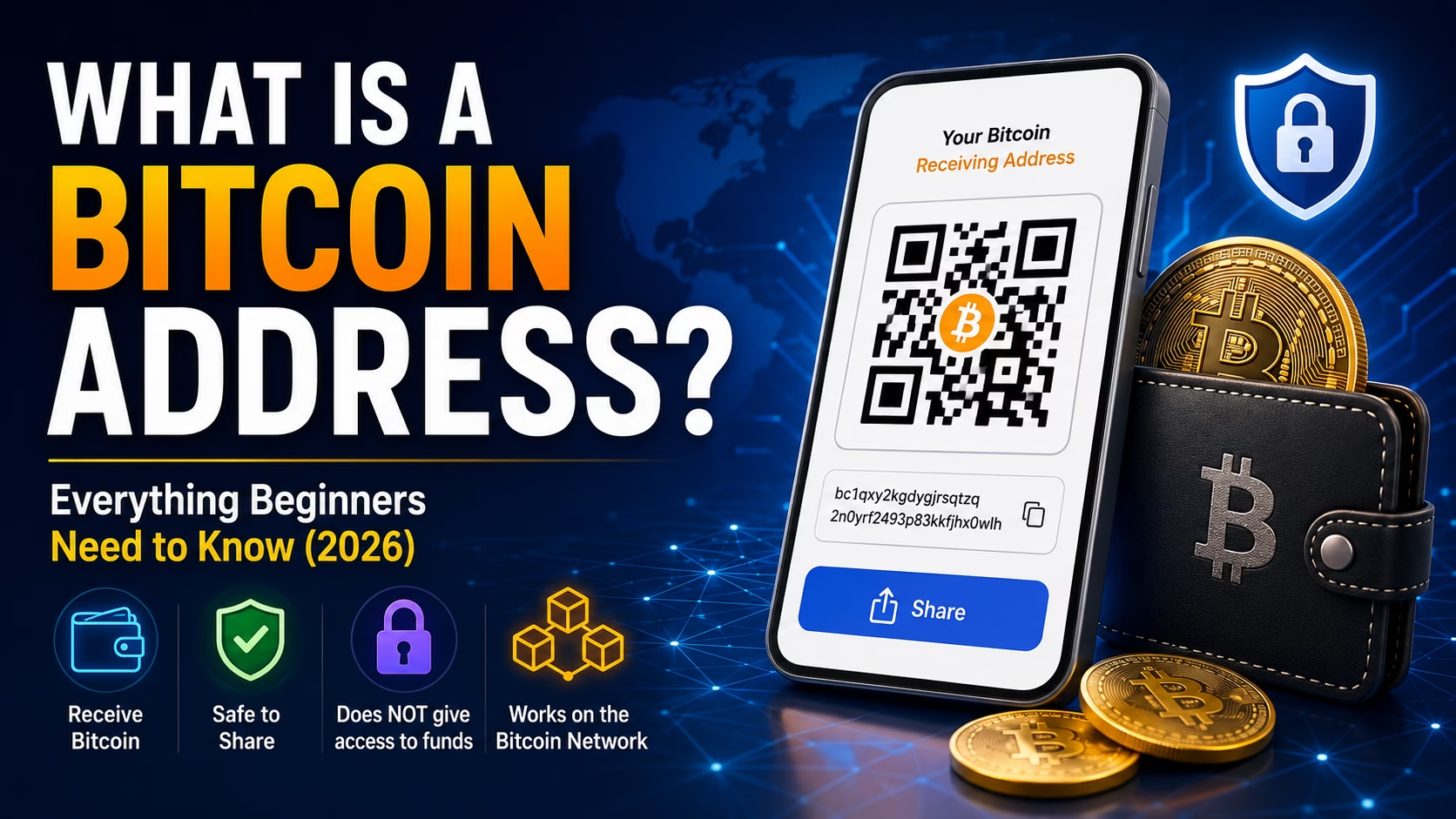
What Is a Bitcoin Address? Introduction
If someone wants to send you Bitcoin, one of the first things they’ll ask for is your Bitcoin address.
Without a Bitcoin address, receiving Bitcoin isn’t possible.
Many beginners confuse a Bitcoin address with a wallet, a public key, or even a private key.
Although these terms are related, they are not the same thing.
A Bitcoin address is simply the destination where Bitcoin can be sent.
Think of it like an email address.
People use your email address to send messages to you.
Likewise, they use your Bitcoin address to send Bitcoin.
Sharing your Bitcoin address is generally safe because it allows others to send funds to you, not spend your Bitcoin.
In this guide, you’ll learn:
- What a Bitcoin address is
- How Bitcoin addresses work
- How they are created
- Different address formats
- Why they’re safe to share
- Common beginner mistakes
- Best security practices
By the end of this article, you’ll understand exactly what a Bitcoin address is and how it fits into the Bitcoin ecosystem.
Quick Summary
A Bitcoin address:
- Receives Bitcoin.
- Is generated from cryptographic keys.
- Can usually be shared safely.
- Does not reveal your private key.
- Does not allow others to spend your Bitcoin.
- Is represented as a string of letters and numbers (or other supported encoding formats depending on the address type).
💡 Key Takeaway
A Bitcoin address is like your payment destination.
People send Bitcoin to your address, while only the wallet owner can authorize spending using the appropriate private keys.
What Is a BTC Address?
A Bitcoin address is a unique identifier that tells the Bitcoin network where Bitcoin should be sent.
When someone transfers Bitcoin to you, they use your Bitcoin address as the destination.
A Bitcoin address is not a bank account.
It does not store Bitcoin itself.
Instead, the blockchain records which addresses are associated with specific Bitcoin transactions and balances.
Your wallet software manages the keys needed to control the Bitcoin associated with your addresses.
Real-Life Analogy
Imagine your home address.
Anyone can mail a package to your home if they know the address.
However, knowing your address does not give them permission to enter your house.
A Bitcoin address works in a similar way.
It tells people where to send Bitcoin but does not allow them to access or spend it.
What Does a Bitcoin Address Look Like?
Bitcoin addresses are strings of letters and numbers.
Modern Bitcoin wallets may generate different address formats depending on the wallet and network features being used.
Examples include:
- Legacy addresses (often begin with 1)
- Script-based addresses (often begin with 3)
- Native SegWit addresses (typically begin with bc1)
Each format is valid but offers different technical characteristics and compatibility.
You don’t need to memorize these formats because your wallet creates them automatically.
📌 Did You Know?
Most modern Bitcoin wallets default to Native SegWit (bech32) addresses because they are more efficient and generally reduce transaction costs compared with older address formats.
Why Does Every Wallet Have an Address?
Without an address, the Bitcoin network wouldn’t know where to deliver a transaction.
Every receiving transaction needs a destination.
The Bitcoin address provides that destination.
Whenever someone sends Bitcoin:
Sender
↓
Recipient’s Bitcoin Address
↓
Bitcoin Network
↓
Blockchain
↓
Recipient’s Wallet
How Is a Bitcoin Address Created?
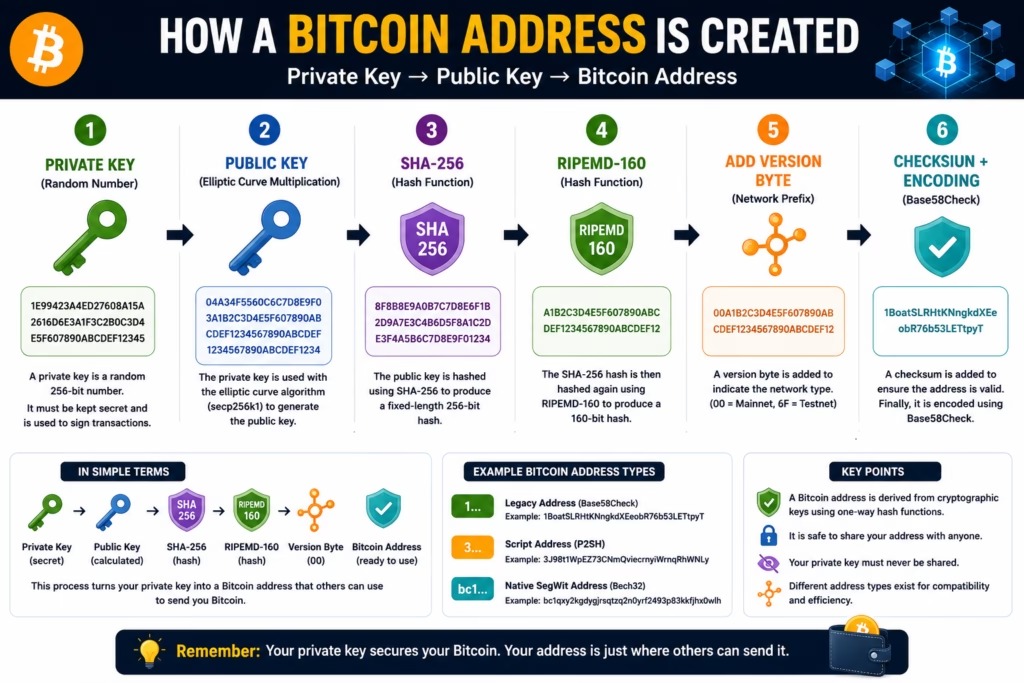
A Bitcoin address is created through several cryptographic steps.
In simplified form:
Private Key

↓

Public Key

↓

Hash Functions

↓

Bitcoin Address
Your wallet performs these calculations automatically.
You don’t need to generate addresses manually.
Importantly, the Bitcoin address is derived through cryptographic processes designed to protect the underlying keys.
Different Types of Bitcoin Addresses
If you’ve ever opened a Bitcoin wallet and noticed that one address starts with 1, another starts with 3, and another begins with bc1, don’t worry—you haven’t done anything wrong.
This is one of the most common questions beginners ask:
“Why do Bitcoin addresses look different?”
The short answer is simple:
Bitcoin has evolved over the years.
As developers improved the Bitcoin network, newer address formats were introduced to make transactions more efficient, reduce fees, and support additional features.
The good news?
All of these address types can receive Bitcoin.
The difference is in how they work behind the scenes.
1. Legacy Addresses (Starts with 1)
Legacy addresses are the original Bitcoin address format introduced when Bitcoin first launched.
Example:
1A1zP1eP5QGefi2DMPTfTL5SLmv7DivfNaThese addresses are still valid today, and many older wallets continue to support them.
However, because they use an older transaction format, they generally require more block space than newer address types. That can translate into higher transaction fees under similar network conditions.
Best for
- Compatibility with older wallets and services.
- Historical understanding of Bitcoin.
Limitations
- Larger transaction size.
- Usually higher fees than modern formats.
- Older technology compared to newer address types.
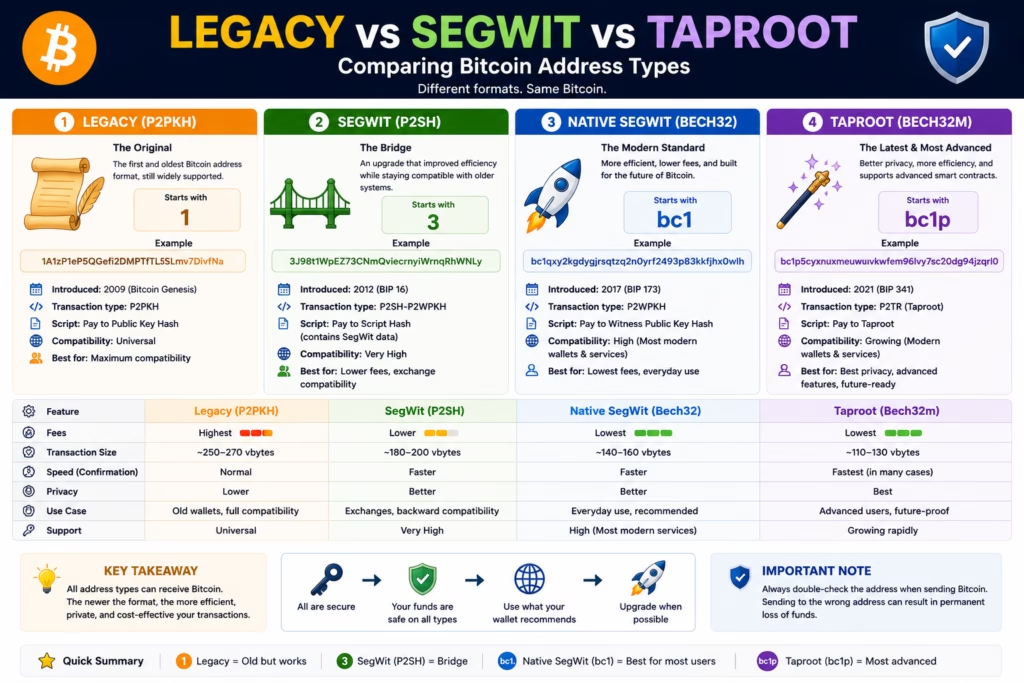
2. Script Addresses (Starts with 3)
As Bitcoin grew, developers introduced a more flexible address format.
These addresses usually begin with 3.
Example:
3J98t1WpEZ73CNmQviecrnyiWrnqRhWNLyThis format enabled features such as multi-signature wallets and also became a bridge for adopting SegWit while remaining compatible with older systems.
Many exchanges and wallets still support this address type.
Benefits
- Broad compatibility.
- Supports more advanced transaction types.
- Often lower fees than legacy addresses.
3. Native SegWit Addresses (Starts with bc1)
Today, if you create a new wallet, there’s a good chance it will generate an address that begins with bc1.
Example:
bc1qxy2kgdygjrsqtzq2n0yrf2493p83kkfjhx0wlhThis is currently the most widely recommended address format for everyday Bitcoin users.
Why?
Because it makes transactions more efficient.
That usually means:
- Lower transaction fees.
- Better use of block space.
- Faster processing under many network conditions.
- Fewer data overheads.
For most beginners, this is the address type you’ll use without even realizing it—your wallet handles everything automatically.
4. Taproot Addresses (Also Starts with bc1)
Bitcoin continues to evolve.
One of the most significant upgrades in recent years is Taproot.
Taproot addresses also begin with bc1, but they use a newer format than Native SegWit.
They improve efficiency and privacy for certain types of transactions while enabling more advanced scripting capabilities.
You don’t need to understand all the technical details right now.
Just know that if your wallet supports Taproot, it’s taking advantage of one of Bitcoin’s latest protocol improvements.
Which Bitcoin Address Should You Use?
If you’re new to Bitcoin, the simplest answer is:
Use whatever address your trusted wallet generates by default.
Modern wallets automatically choose the most appropriate format for your transactions.
Unless you have a specific compatibility requirement, there is usually no need to manually switch address types.
💡 Quick Tip
If your wallet gives you a bc1 address, that’s generally the recommended option for most users because it is efficient, widely supported by modern services, and often results in lower transaction fees.
Bitcoin Address vs Public Key
These two terms are often confused.
Let’s clear that up.
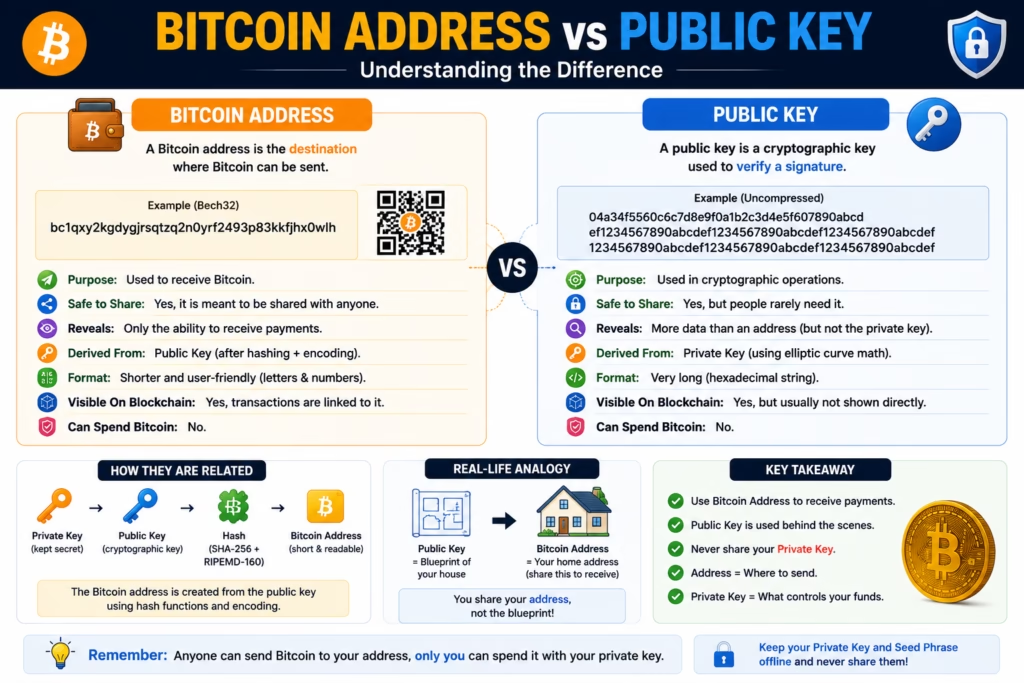
A public key is a cryptographic key.
A Bitcoin address is a shorter, user-friendly identifier derived from the public key through additional cryptographic processing.
Think of it this way:
Private Key
      │
      ▼
Public Key
      │
      ▼
Bitcoin Address
Most people never see their raw public key.
Instead, wallets display the Bitcoin address because it’s easier to share and less error-prone.
Real-Life Analogy
Imagine your house.
The public key is like the detailed architectural blueprint.
The Bitcoin address is simply the street address printed on your mailbox.
When someone wants to send you a package, they only need the street address.
They don’t need the building plans.
That’s why people share Bitcoin addresses—not public keys.
Bitcoin Address vs Private Key
This is where beginners sometimes make a dangerous mistake.
A Bitcoin address is meant to be shared.
A private key must remain secret.
Here’s a simple comparison:
| Bitcoin Address | Private Key |
|---|---|
| Used to receive Bitcoin | Used to authorize spending |
| Safe to share | Never share |
| Can be displayed publicly | Must remain confidential |
| Does not give access to funds | Controls the associated funds |
If someone asks for your Bitcoin address, they’re asking where to send Bitcoin.
If someone asks for your private key or recovery phrase, that’s a major red flag. Legitimate wallet providers and exchanges should not ask for those secrets.
Can You Share Your Bitcoin Address?
Yes.
In fact, that’s exactly what it’s for.
If you want someone to send you Bitcoin, you’ll typically share your receiving address or a QR code generated from it.
Sharing your Bitcoin address does not allow others to:
- Spend your Bitcoin.
- Access your wallet.
- Discover your private key.
- Take control of your funds.
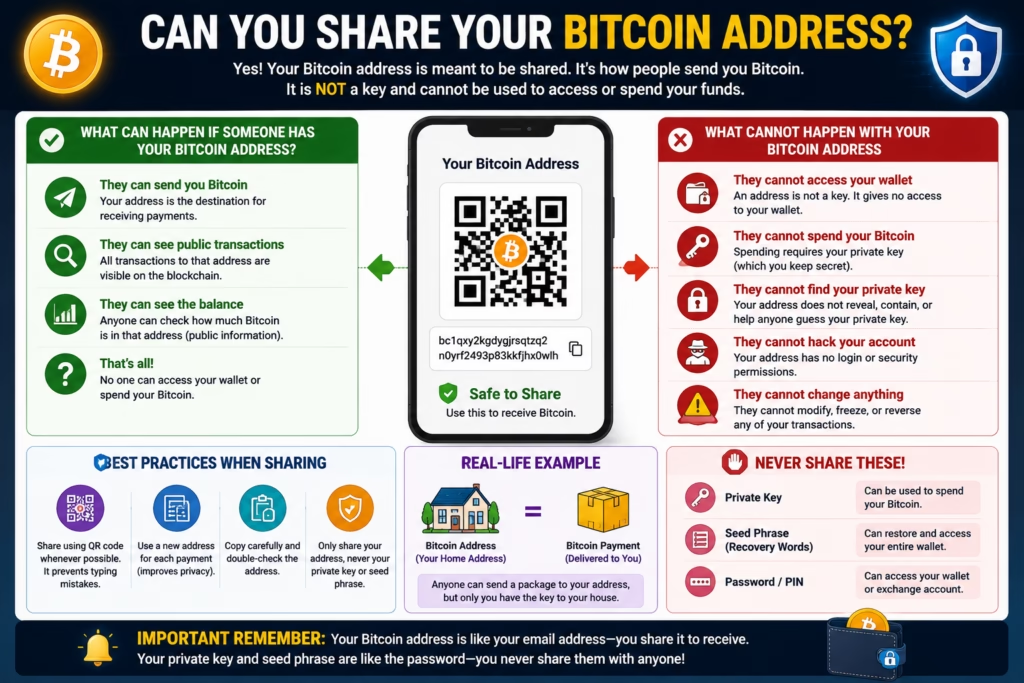
What they can do is send Bitcoin to that address and view transactions associated with it on the public blockchain.
That’s why many wallets generate fresh receiving addresses to improve privacy.
Why Do Wallets Generate Multiple Addresses?
This surprises many first-time users.
You might receive Bitcoin today using one address, and next week your wallet shows a completely different receiving address.
Did something go wrong?
Not at all.
Modern HD (Hierarchical Deterministic) wallets can generate many different receiving addresses from the same recovery phrase.
This improves privacy because it becomes harder for someone to associate all of your transactions with a single address.
Even though the addresses look different, they’re still managed by the same wallet.
📌 Did You Know?
Many wallets automatically create a new receiving address after each payment. This is a privacy feature—not a bug. You can usually still receive funds sent to your older addresses, but using fresh addresses helps reduce the amount of publicly linked transaction history.
Can Someone Steal My Bitcoin If They Know My Address?
This is probably one of the biggest fears beginners have.
Imagine you’ve just bought your first Bitcoin.
Your friend asks,
“Send me your Bitcoin address so I can pay you.”
You suddenly wonder:
“If I give them my address, can they steal my Bitcoin?”
The answer is simple:
No.
A Bitcoin address is designed to be shared.
In fact, if you never shared your Bitcoin address, nobody would be able to send Bitcoin to you.
Think about your email address.
Thousands of people could know it.
That doesn’t mean they can log into your email account.
The same idea applies here.
Your Bitcoin address is only the destination.
It is not the key to your wallet.
What Can Someone Do With Your BTC Address?
If another person knows your Bitcoin address, they can:
- ✅ Send Bitcoin to you
- ✅ View public transactions associated with that address using a blockchain explorer
- ✅ See the amount received or sent by that address on the public blockchain
That’s it.
They cannot:
- Spend your Bitcoin
- Access your wallet
- Discover your private key
- Recover your recovery phrase
- Change your wallet
Real-Life Example
Imagine your house address.
Knowing your address allows someone to deliver a parcel.
It doesn’t let them unlock your front door.
Your Bitcoin address works exactly the same way.
Why Are Bitcoin Transactions Public?
Many people hear that Bitcoin is “anonymous.”
That’s not completely accurate.
Bitcoin is pseudonymous.
This means transactions are linked to Bitcoin addresses rather than directly to real names.
Anyone can view transactions recorded on the blockchain.
However, the blockchain itself doesn’t automatically reveal who owns a particular address.
Depending on how an address is used and what information is shared elsewhere, it may or may not be possible to associate an address with a real-world identity.
Should You Use the Same BTC Address Every Time?
Technically, yes.
Practically, it’s better not to.
Here’s why.
Imagine you post your Bitcoin address on social media.
Over time, everyone can see:
- Every payment sent to that address
- Every payment leaving that address
- The balance associated with that address at different points in time
Modern wallets improve privacy by generating a new receiving address whenever you receive Bitcoin.
Even though the addresses change, they still belong to the same wallet.
💡 Quick Tip
Using a fresh receiving address for each payment doesn’t make your Bitcoin more secure, but it does improve your privacy by making it harder for others to link all of your transactions together.
Can You Send Bitcoin to the Wrong Address?
Unfortunately…
Yes.
And this is one of the most common beginner mistakes.
Imagine typing a long string of random letters and numbers.
It’s easy to worry about making a mistake.
Fortunately, Bitcoin addresses include error-detection mechanisms, so many accidental typing mistakes produce an invalid address that wallets will reject.
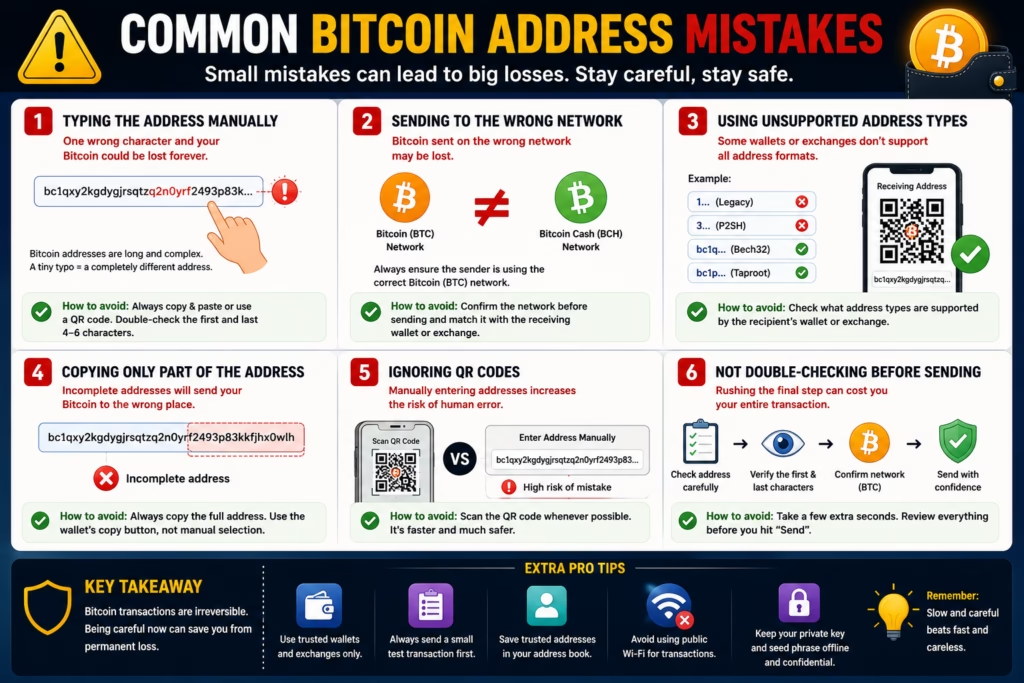
However, if you send Bitcoin to a different valid address by mistake, the transaction generally cannot be reversed after confirmation.
That’s why you should always double-check the recipient before sending.
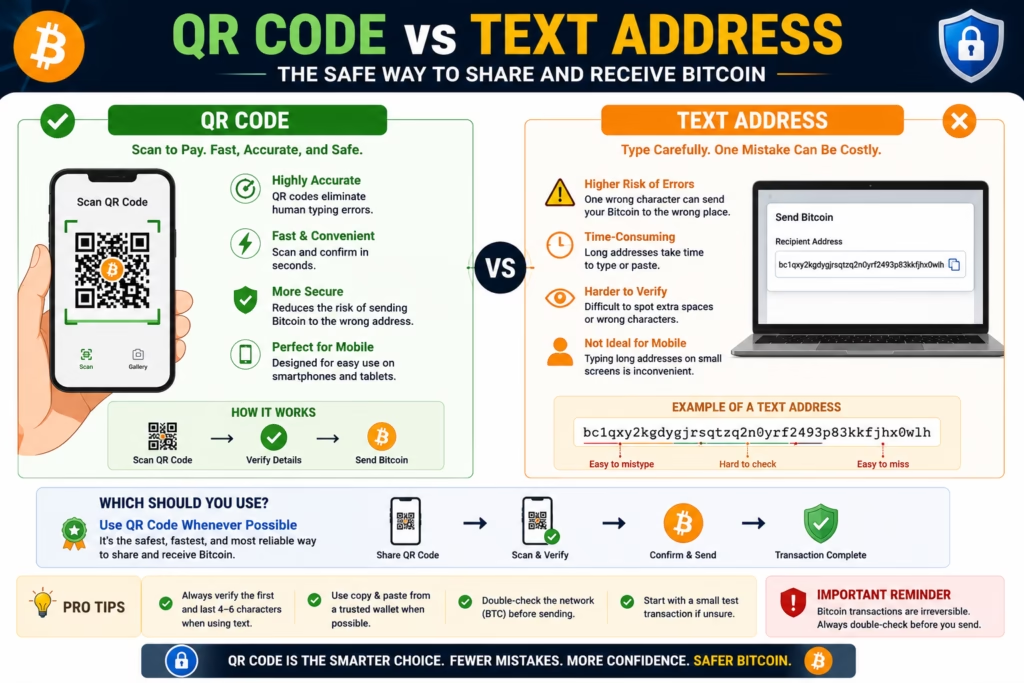
The Safest Way to Share Your BTC Address
Most wallets make this easy.
Instead of copying a long string of characters, you can simply share:
- A QR code
- The copied address
- A payment request (if supported by the wallet)
QR codes help reduce copy-and-paste mistakes, especially when using mobile devices.
Common Beginner Mistakes
Let’s look at some mistakes new Bitcoin users often make.
Avoiding these will save you time and frustration.
❌ Confusing a BTC Address With a Private Key
This is the most serious mistake.
Remember:
Bitcoin Address = Safe to share
Private Key = Never share
If someone asks for your private key or recovery phrase, stop immediately.
Legitimate services do not need them to send you Bitcoin.
❌ Copying Only Part of the Address
Bitcoin addresses can be long.
Some people accidentally copy only the beginning or end.
Always use your wallet’s Copy button instead of selecting the text manually.
❌ Sending Bitcoin to the Wrong Network
Some exchanges and wallets support multiple cryptocurrencies.
Make sure the sender is using the correct Bitcoin network when making a Bitcoin transfer.
Sending assets to an unsupported network or address type can create recovery challenges and, in some cases, lead to permanent loss.
Always verify compatibility before sending.
❌ Ignoring the QR Code
QR codes exist for a reason.
They reduce the chance of typing mistakes.
Whenever possible, scan the QR code instead of entering the address manually.
❌ Believing Every Address Belongs to One Person Forever
Modern wallets often create many addresses from the same recovery phrase.
Seeing a new receiving address in your wallet is usually normal and doesn’t mean you’ve lost your Bitcoin.
Frequently Asked Questions
Can I give my Bitcoin address to anyone?
Yes.
A Bitcoin address is intended to be shared with anyone who wants to send you Bitcoin.
Can someone hack my wallet using my Bitcoin address?
No.
A Bitcoin address alone cannot be used to access your wallet or spend your Bitcoin.
Why did my wallet generate a new address?
Most modern wallets automatically generate new receiving addresses to improve privacy while keeping all of them connected to the same wallet.
Do old Bitcoin addresses still work?
In many wallets, yes.
Previously generated receiving addresses generally remain associated with your wallet, although your wallet may recommend using a fresh address for better privacy.
Can two people have the same Bitcoin address?
No.
Bitcoin addresses are designed to be unique.
The chance of two wallets independently generating the same valid address is considered astronomically small.
Is a Bitcoin address the same as a wallet?
No.
A wallet manages your cryptographic keys and addresses.
A Bitcoin address is simply one destination that people use to send Bitcoin.
What Should You Learn Next?
You’re making excellent progress.
After understanding Bitcoin addresses, the next topic should be:
You’ll learn:
- Why every wallet gives you 12 or 24 words.
- How those words can restore your wallet.
- Why protecting them is so important.
- Common mistakes people make with seed phrases.
It naturally builds on everything you’ve learned about wallets, private keys, and addresses.
Continue your Bitcoin learning journey with:
- What Is Bitcoin?
- What Is Blockchain?
- How Bitcoin Wallets Work
- Bitcoin Mining Explained
- Public Key vs Private Key
Final Thoughts
A Bitcoin address is one of the simplest yet most important parts of using Bitcoin.
It’s the information you share when you want to receive funds, but it doesn’t give anyone permission to spend them.
Understanding the difference between a Bitcoin address, a public key, and a private key helps you avoid common mistakes and use Bitcoin with greater confidence.
As you continue learning, you’ll discover that wallets, addresses, private keys, and recovery phrases all work together to create a secure and decentralized payment system.
Once these concepts click, the rest of Bitcoin becomes much easier to understand.