

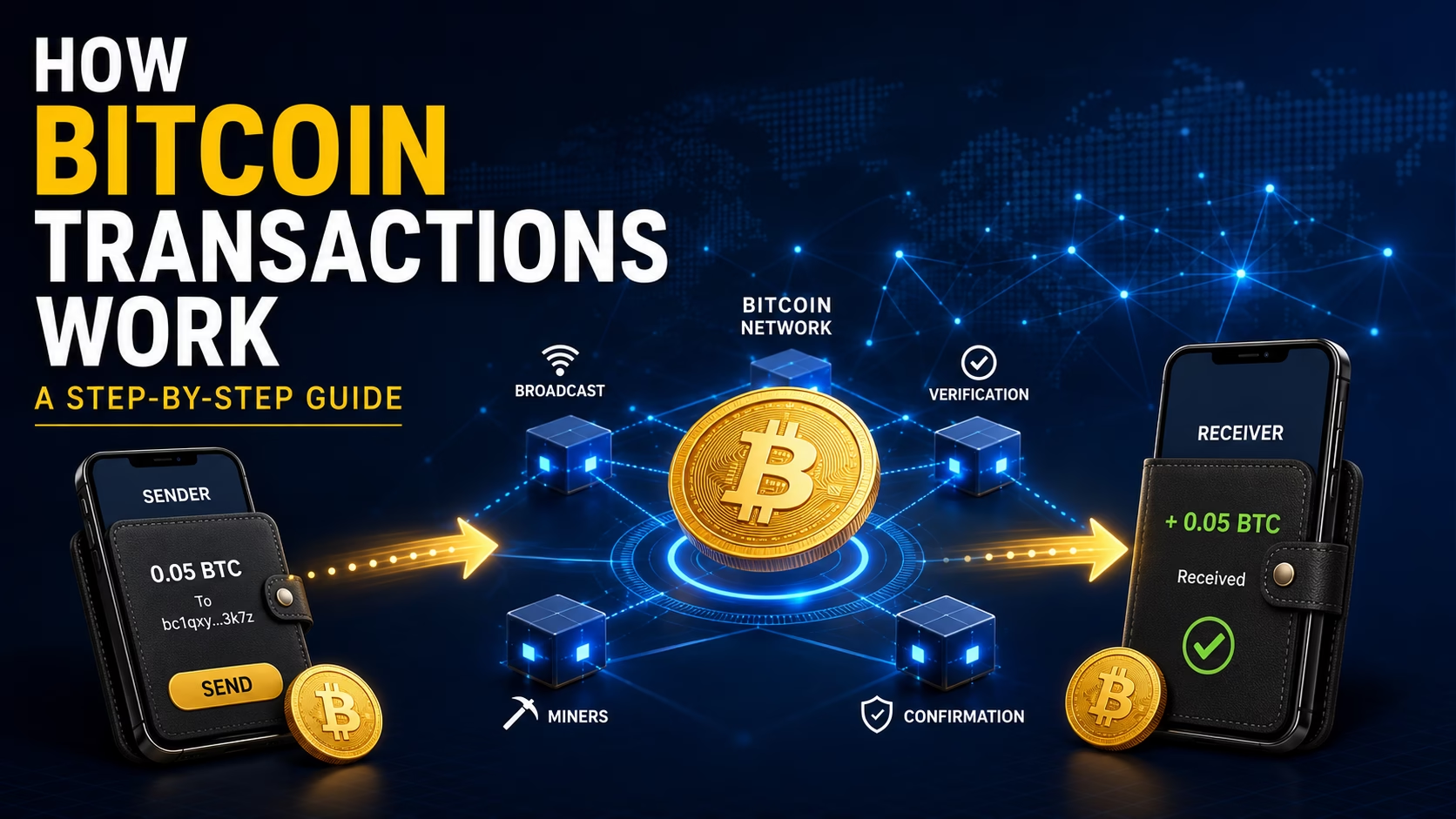
How Bitcoin Transactions Work: Introduction
Sending Bitcoin may seem as simple as entering a wallet address and pressing the Send button.
However, behind the scenes, a sophisticated process begins.
Within seconds, your wallet creates a cryptographically signed transaction, broadcasts it to thousands of Bitcoin nodes, waits in the mempool, competes for inclusion in a block, and is eventually confirmed on the blockchain.
Unlike traditional bank transfers, no central authority approves or processes your payment.
Instead, Bitcoin relies on cryptography, decentralized verification, and blockchain technology to securely transfer ownership from one wallet to another.
Understanding this process will help you:
- Know what happens after clicking Send
- Understand why confirmations matter
- Learn why transaction fees exist
- See how miners verify transactions
- Understand why Bitcoin transactions are secure
- Avoid common beginner mistakes
By the end of this guide, you’ll understand the complete journey of a Bitcoin transaction—from the sender’s wallet to final blockchain confirmation.
Quick Summary
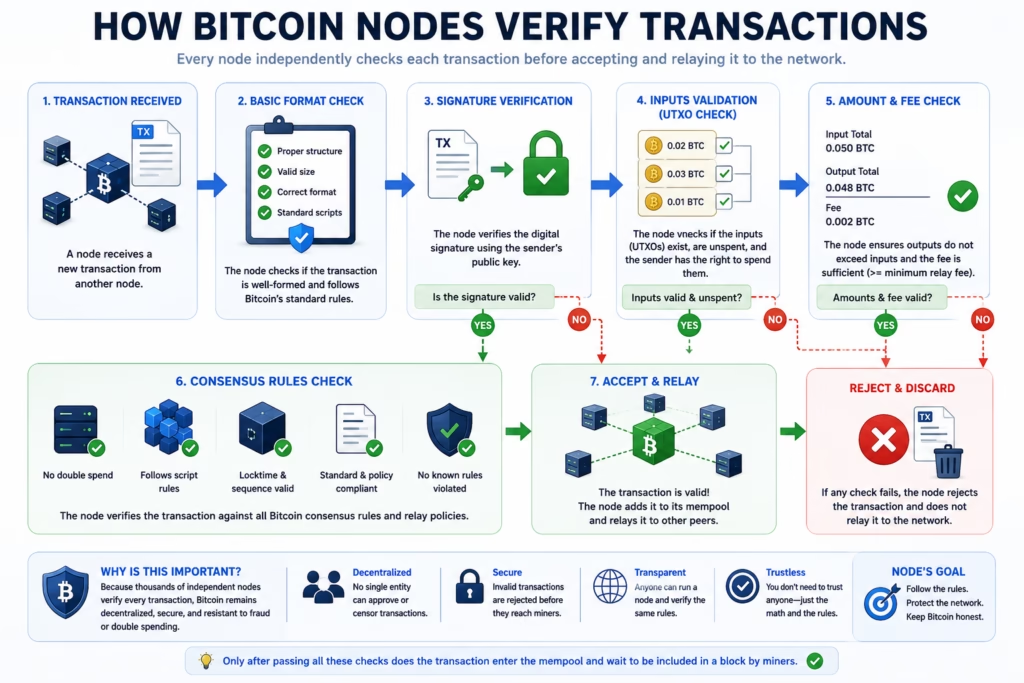
Every Bitcoin transaction follows these basic steps:
- The sender creates a transaction.
- The wallet signs it using the sender’s private key.
- The transaction is broadcast to the Bitcoin network.
- Bitcoin nodes verify its validity.
- The transaction enters the mempool.
- A miner includes it in a block.
- The block is added to the blockchain.
- The receiver sees confirmed Bitcoin.
Although these steps sound complex, they happen automatically whenever you send Bitcoin.
💡 Key Takeaway
A Bitcoin transaction is not simply “sending coins.”
It is the process of creating, signing, verifying, and permanently recording a transfer of ownership on the Bitcoin blockchain.
What Is a Bitcoin Transaction?
A Bitcoin transaction is a digital record that transfers control of Bitcoin from one wallet to another.
Rather than moving physical coins, the transaction updates the blockchain to reflect which wallet is authorized to spend specific Bitcoin.
Every transaction contains important information such as:
- Sender information (represented through cryptographic authorization, not personal identity)
- Recipient wallet address
- Amount of Bitcoin being transferred
- Transaction fee
- Digital signature
- Other protocol-specific data required for validation
Once confirmed and added to the blockchain, the transaction becomes part of Bitcoin’s permanent public ledger.
Real-Life Analogy
Imagine sending a registered parcel through a postal service.
You write the recipient’s address, sign the shipping form, and hand the parcel to the postal network.
The parcel passes through multiple checkpoints before reaching its destination.
Bitcoin transactions follow a similar idea.
Your wallet prepares the transaction, signs it, broadcasts it to the network, and independent participants verify it before it becomes part of the blockchain.
Why Doesn’t Bitcoin Need a Bank?
Traditional payments depend on banks to verify balances and approve transfers.
Bitcoin works differently.
Instead of trusting one organization, thousands of independent nodes verify every transaction according to the same protocol rules.
This decentralized approach helps ensure that:
- Transactions follow Bitcoin’s consensus rules.
- Invalid transactions are rejected.
- No single organization controls the network.
- Anyone can independently verify the blockchain.
📌 Did You Know?
Every confirmed Bitcoin transaction remains permanently recorded on the blockchain and can be viewed using public blockchain explorers.
Personal identities, however, are not stored directly within Bitcoin transactions.
Step 1 — The Sender Creates a Transaction
Let’s imagine Alice wants to send 0.05 BTC to Bob.
Alice opens her Bitcoin wallet and enters:
- Bob’s wallet address
- Amount: 0.05 BTC
- Network fee
After reviewing the details, she presses Send.
At this moment, the wallet creates a transaction.
The transaction has not yet reached the blockchain.
It exists only inside Alice’s wallet until it is signed.
What Information Does the Wallet Prepare?
The wallet assembles several pieces of information, including:
- The recipient’s Bitcoin address
- The amount to transfer
- A transaction fee
- References to Bitcoin that Alice is authorized to spend (often called inputs in Bitcoin’s transaction model)
- New outputs describing where the Bitcoin should go
- Other data required by the Bitcoin protocol
This information forms the transaction that will later be signed.
Step 2 — The Wallet Creates a Digital Signature
Once the transaction is prepared, Alice’s wallet uses her private key to create a digital signature.
This signature proves that:
- Alice is authorized to spend the Bitcoin associated with her wallet.
- The transaction has not been altered after signing.
- The private key was used without revealing it.
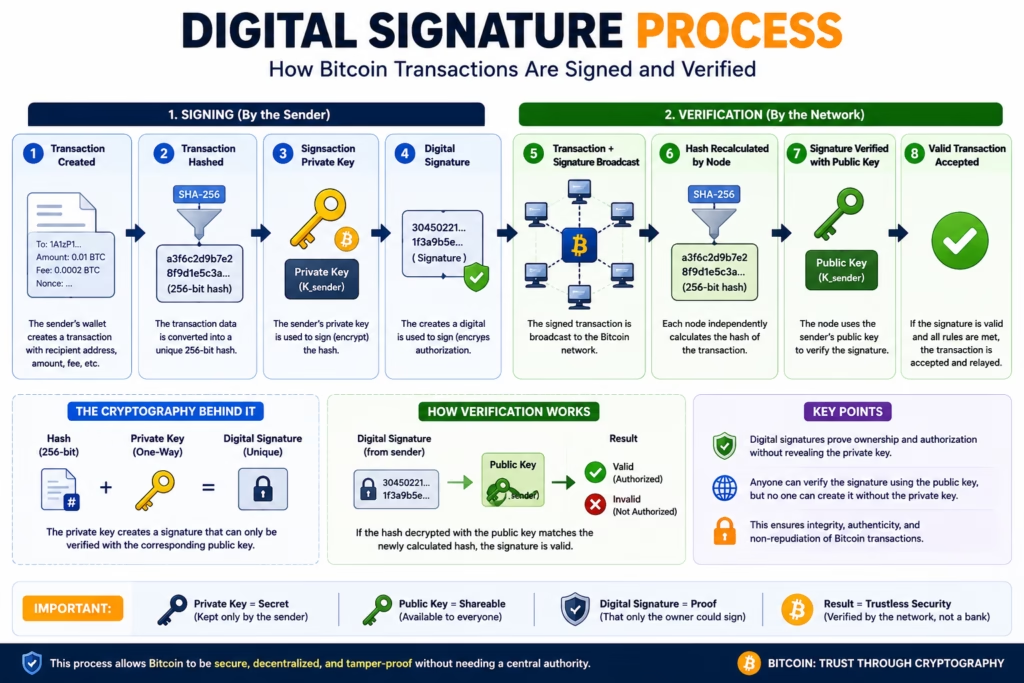
Importantly, the private key itself never leaves the wallet.
Only the resulting digital signature becomes part of the transaction.
Think of It Like Signing a Legal Document
Imagine signing an important contract.
Your handwritten signature proves that you approved it.
People can verify your signature without knowing anything else about you.
Bitcoin uses a similar idea.
The digital signature proves authorization while keeping the private key confidential.
💡 Key Takeaway
The private key is never sent across the Bitcoin network.
Instead, it is used locally to generate a digital signature that other participants can verify using the corresponding public key.
Step 3 — The Transaction Is Broadcast
After signing, the wallet broadcasts the transaction to the Bitcoin network.
The transaction is sent to nearby Bitcoin nodes, which then relay it to other nodes across the world.
Within a short time, thousands of nodes may receive a copy.
At this stage:
- The transaction is public.
- The digital signature is included.
- The private key remains secret.
- The transaction has not yet been confirmed.
The next step is validation.
Step 4 — Bitcoin Nodes Verify the Transaction
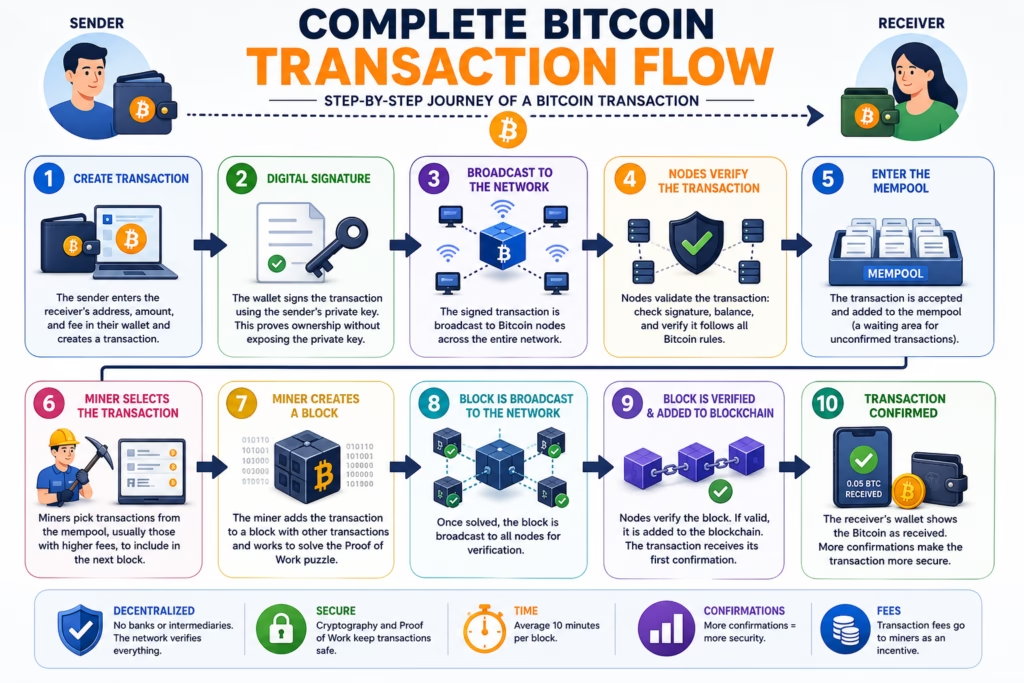
After your wallet broadcasts the transaction, it reaches thousands of independent Bitcoin nodes around the world.
These nodes act like referees.
Their job is not to approve transactions based on trust.
Instead, they verify whether every transaction follows Bitcoin’s protocol rules.
Each node independently checks several things, including:
- Is the digital signature valid?
- Has the sender authorized the transaction?
- Is the transaction correctly formatted?
- Are the referenced Bitcoin available to spend?
- Does the transaction comply with Bitcoin’s consensus rules?
If the transaction fails any of these checks, the node rejects it.
If it passes, the node forwards it to other nodes across the network.
Why Is This Important?
Because thousands of nodes perform these checks independently, Bitcoin does not rely on a single organization to validate transactions.
This decentralized verification helps prevent fraud, double spending, and invalid transactions from entering the blockchain.
💡 Key Takeaway
Bitcoin nodes don’t decide who is allowed to send Bitcoin.
They verify whether the transaction follows Bitcoin’s rules.
Step 5 — The Transaction Enters the Mempool
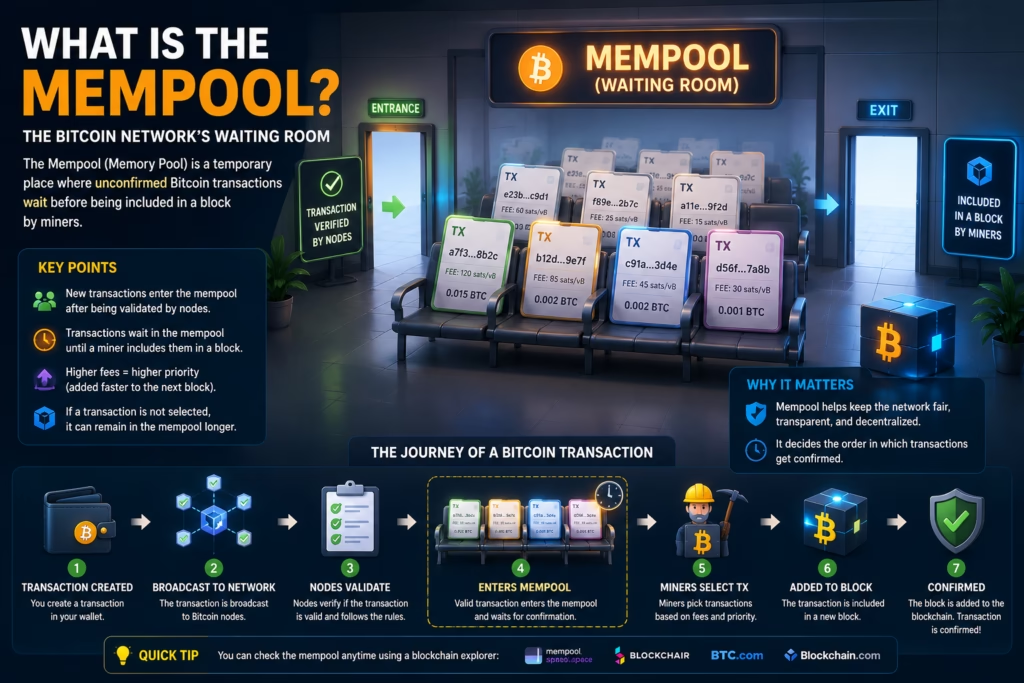
After verification, the transaction enters the mempool.
The mempool (short for memory pool) is a temporary waiting area where valid but unconfirmed transactions are stored before miners include them in a block.
Think of it as a queue.
Your transaction is waiting for a miner to select it.
Real-Life Analogy
Imagine arriving at an airport.
After security checks, you wait at the departure gate.
You have been approved to travel, but you haven’t boarded the plane yet.
The mempool works in a similar way.
Your transaction has passed validation but is waiting to be included in the next available block.
Can the Mempool Become Busy?
Yes.
During periods of heavy network activity, many transactions compete for limited block space.
When this happens:
- The mempool grows larger.
- Some transactions wait longer.
- Users may choose to pay higher transaction fees to improve the likelihood of earlier inclusion.
Waiting time depends on network conditions rather than a guaranteed schedule.
📌 Did You Know?
Every Bitcoin node maintains its own mempool.
Although they are generally similar, mempools across different nodes may not always contain exactly the same set of unconfirmed transactions at a given moment.
Step 6 — Miners Select Transactions
Bitcoin miners regularly create candidate blocks.
Since each block has limited capacity, miners cannot include every waiting transaction.
Instead, miners typically select transactions according to factors such as:
- Transaction fees offered
- Available block space
- Local mempool contents
- Bitcoin protocol rules
Higher transaction fees often increase the likelihood that a transaction will be included sooner, but they do not guarantee immediate confirmation.
Why Are Transaction Fees Needed?
Many beginners think Bitcoin transaction fees are paid to Bitcoin itself.
That isn’t how the system works.
Transaction fees are generally collected by the miner who successfully mines the block containing the transaction.
These fees help:
- Encourage miners to process transactions.
- Support network security.
- Allocate limited block space during busy periods.
Do Higher Fees Always Mean Faster Confirmation?
Not necessarily.
Although transactions offering higher fees are often more attractive to miners, confirmation time also depends on factors such as:
- Overall network congestion
- Block availability
- Mempool size
- Fee market conditions
Step 7 — The Transaction Is Included in a Block
Once a miner selects your transaction, it becomes part of a candidate block.
That block contains:
- A reference to the previous block
- A list of verified transactions
- A timestamp
- A block header
- Other protocol-required information
The miner then works to solve Bitcoin’s Proof of Work challenge.
If successful, the new block is broadcast to the network.
Other nodes independently verify the block before accepting it.
What Happens Next?
If the block is valid:
- Nodes update their copy of the blockchain.
- Your transaction is now included in an official block.
- The transaction receives its first confirmation.
This is the first point at which your transaction becomes part of Bitcoin’s permanent blockchain history.
💡 Key Takeaway
A transaction is not considered confirmed simply because it was broadcast.
It becomes confirmed only after being included in a valid block that is accepted by the Bitcoin network.
Step 8 — Blockchain Confirmation
When a valid block is added to the blockchain, your transaction receives its first confirmation.
Each additional block built on top of that block adds another confirmation.
For example:
- Block containing your transaction → 1 confirmation
- Next block added → 2 confirmations
- Following block → 3 confirmations
As more blocks are added, reversing the transaction becomes increasingly difficult.
Different businesses and services may require different numbers of confirmations depending on their own risk policies.
Why Do Confirmations Matter?
Confirmations increase confidence that the transaction has been permanently recorded on the blockchain.
For small payments, some merchants may choose to accept fewer confirmations.
For larger transfers, organizations often wait for additional confirmations before considering the payment final.
The required number of confirmations is a business decision rather than a rule enforced by the Bitcoin protocol.
⚠ Common Mistake
Many beginners assume that once they press Send, the Bitcoin immediately belongs to the recipient.
In reality:
- The transaction is first created.
- Then signed.
- Then verified by nodes.
- Then enters the mempool.
- Then selected by a miner.
- Then included in a block.
- Then receives confirmations.
Only after this process is the transaction considered confirmed on the blockchain.
Why Do Some Bitcoin Transactions Take Longer?
One of the most common questions beginners ask is:
“I sent Bitcoin. Why hasn’t it arrived yet?”
In many cases, the Bitcoin has already been broadcast to the network.
The delay usually occurs because the transaction is waiting to be included in a block.
Several factors can influence confirmation time.
1. Network Congestion
When many people are sending Bitcoin at the same time, the mempool becomes crowded.
Since each block has limited capacity, miners cannot include every pending transaction immediately.
As a result, some transactions remain in the mempool until space becomes available.
2. Transaction Fee
Users can choose the network fee they attach to a transaction.
Higher fees often make a transaction more attractive to miners because transaction fees form part of the miner’s reward.
Lower-fee transactions may still be confirmed, but they can sometimes wait longer during periods of high demand.
3. Current Mining Activity
Bitcoin is designed to produce a new block approximately every 10 minutes on average.
However, this is an average rather than a guaranteed schedule.
Some blocks are found sooner, while others take longer.
Because of this natural variation, confirmation times can differ even under normal network conditions.
💡 Key Takeaway
A delayed Bitcoin transaction does not necessarily mean it has failed.
Often, it is simply waiting for inclusion in a future block.
What Happens After Confirmation?
Once a transaction is included in a valid block:
- The blockchain is updated.
- Wallet software detects the new block.
- The recipient’s wallet reflects the confirmed transaction.
- Additional confirmations continue to accumulate as new blocks are added.
The transaction then becomes part of Bitcoin’s permanent transaction history.
Can a Bitcoin Transaction Be Reversed?
Generally, no.
After a transaction has been confirmed and additional blocks have been added, reversing it becomes increasingly impractical.
This is one reason why Bitcoin users should carefully verify recipient addresses before sending funds.
Real-Life Analogy
Imagine mailing a sealed letter.
Before posting it, you can still correct the address.
After the letter has been delivered, changing the destination is no longer possible.
Bitcoin transactions follow a similar principle.
Once confirmed on the blockchain, they are generally considered irreversible.
Common Beginner Mistakes
Sending Bitcoin to the Wrong Address
Bitcoin transactions generally cannot be reversed after confirmation.
Always verify the recipient’s address before sending.
Paying Extremely Low Fees
Very low transaction fees may increase confirmation time during periods of network congestion.
Many wallets estimate appropriate fees automatically based on current network conditions.
Believing Bitcoin Is Sent Instantly
Pressing Send only begins the transaction process.
The transaction still needs to be verified, included in a block, and confirmed by the network.
Confusing Confirmation With Wallet Notification
Some wallets display a transaction immediately after it is broadcast.
This does not necessarily mean it has been confirmed.
Always check the confirmation status if it is important for your transaction.
Ignoring Wallet Security
A successful transaction depends on protecting your private keys and recovery phrase.
Good transaction security starts with good wallet security.
⚠ Common Mistake
Many beginners refresh their wallet every few seconds after sending Bitcoin.
If the transaction has already been broadcast successfully, the remaining time usually depends on network conditions rather than repeated refreshing.
Frequently Asked Questions
What is a Bitcoin transaction?
A Bitcoin transaction is a digitally signed instruction that transfers control of Bitcoin from one wallet to another and records that transfer on the blockchain.
How long does a Bitcoin transaction take?
Confirmation times vary depending on network activity, transaction fees, and when the next blocks are found.
Bitcoin aims for an average block interval of about 10 minutes, but individual transactions may confirm sooner or later.
Why does Bitcoin charge transaction fees?
Transaction fees help compensate miners for including transactions in blocks and contribute to the economic incentives that support network security.
Can I cancel a Bitcoin transaction?
If a transaction has already been confirmed on the blockchain, it generally cannot be cancelled.
Options for unconfirmed transactions depend on wallet capabilities and network conditions, and are not always available.
What is the mempool?
The mempool is a temporary collection of valid but unconfirmed Bitcoin transactions waiting to be included in future blocks.
Why are confirmations important?
Confirmations increase confidence that a transaction has been permanently recorded on the blockchain and becomes increasingly difficult to reverse.
Can someone change my Bitcoin transaction?
Once a valid transaction has been confirmed and additional blocks are built on top of it, altering it becomes increasingly impractical.
What Should You Learn Next?
Continue your Bitcoin learning journey with:
- What Is Bitcoin?
- What Is Blockchain?
- How Bitcoin Wallets Work
- Bitcoin Mining Explained
- Public Key vs Private Key
- What Is A Bitcoin Address?
- What Is a Bitcoin Address?
- Seed Phrase Explained
- Bitcoin Transaction Fees Explained
Final Thoughts
Bitcoin transactions may appear simple from the user’s perspective, but behind every transfer is a carefully designed process involving cryptography, decentralized verification, and blockchain consensus.
From creating a transaction and generating a digital signature to network validation, mining, and blockchain confirmation, every step contributes to the security and reliability of the Bitcoin network.
Understanding this process helps users make informed decisions, avoid common mistakes, and better appreciate how Bitcoin operates without relying on a central authority.
Whether you’re sending your first Bitcoin payment or exploring blockchain technology in greater depth, learning how transactions work is an essential foundation for understanding the broader cryptocurrency ecosystem.
Disclaimer
This article is intended for educational and informational purposes only.
It does not constitute financial, investment, legal, or tax advice.
Always verify important information using official sources and use trusted wallet software when sending or receiving Bitcoin.
References
Review and verify information using primary sources such as:
- Bitcoin: A Peer-to-Peer Electronic Cash System (Satoshi Nakamoto, 2008)
- Bitcoin.org
- Bitcoin Core Documentation
- Bitcoin Developer Documentation
- Relevant Bitcoin Improvement Proposals (BIPs)